
Blaptini
Leach, 1815
Genus Guides
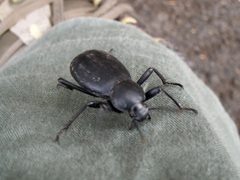
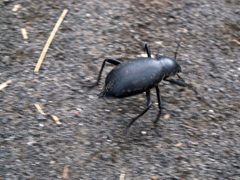
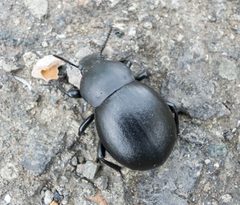
1Blaptini is a tribe of darkling beetles within the Blaptinae (Tenebrionidae). The tribe contains more than 30 and was moved from Tenebrioninae to the resurrected subfamily Blaptinae in 2021, representing a major taxonomic reclassification. Members are primarily distributed in arid and semi-arid regions of Asia, with notable diversity on the Qinghai-Xizang (Tibetan) Plateau and in the Mediterranean basin. The tribe includes flightless adapted to high-elevation and xeric environments.
Pronunciation
How to pronounce Blaptini: /ˈblæptɪˌnaɪ/
These audio files are automatically generated. While they are not always 100% accurate, they are a good starting point.
Identification
Blaptini can be distinguished from related tribes within Blaptinae by morphological characters associated with the subtribe Gnaptorinina, which includes 12 and 189 . Members of the genus Blaps, the largest genus in the tribe, are large-bodied and flightless. Species-level identification often requires examination of male genitalia and subtle morphological differences; molecular data (COI gene) has been used to resolve cryptic , particularly in high-elevation genera such as Pseudognaptorina and Nalepa.
Images
Habitat
Arid and semi-arid environments, including high-elevation regions of the Qinghai-Xizang (Tibetan) Plateau. The subtribe Gnaptorinina is predominantly found at high elevations in this region. Mediterranean of Blaps occupy semi-arid to arid , with western Mediterranean species generally associated with semi-arid regions and eastern Mediterranean species with more arid conditions.
Distribution
Primarily Palearctic, with centers of diversity in Central Asia (Qinghai-Xizang Plateau, including China and Nepal), the Mediterranean basin, and Iran. Specific documented localities include: Iran (Eastern Alborz Mountains, Semnan Province); China (Guizhou, Yunnan, Sichuan, Xizang); and Nepal. The Nalepa is to the Tibetan Plateau. Historical distribution records have been corrected for some ; for example, Blaps scabiosa occurs only in Iran, not in the Tien Shan region as previously reported.
Life Cycle
Larvae have been described for some , including Nalepa cylindracea and N. quadrata, with molecular approaches used to associate larvae with . The includes , larva, pupa, and adult stages, though specific developmental details are known only for select species.
Behavior
Members of the Blaps are flightless, an to arid and semi-arid environments. This trait is widespread across the tribe and represents a significant ecological constraint on .
Similar Taxa
- PlatyscelidiniClosely related tribe within Blaptinae; distinguished by morphological and molecular characters, though specific diagnostic features require detailed examination.
- Tenebrioninae (sensu stricto)Formerly included Blaptini, but the tribe was removed to the resurrected Blaptinae in 2021 based on phylogenetic studies by Kamiński et al. and Bouchard et al.
More Details
Taxonomic History
In 2021, Kamiński et al. moved Blaptini and six other tribes from Tenebrioninae into the newly resurrected Blaptinae. This reclassification included 281 and approximately 4000 , representing about 50% of the former Tenebrioninae. The new classification was adopted by Bouchard et al. the same year.
Notable Genera
Blaps is the largest and most studied , with about 230 in the nominate subgenus; Pseudognaptorina and Nalepa are to the Qinghai-Xizang Plateau and have been subjects of recent taxonomic revision using molecular and morphological data.
Sources and further reading
- BugGuide
- Wikipedia
- iNaturalist taxon
- Catalogue of Life
- Revision of the genus Colasia Koch, 1965 (= Belousovia Medvedev, 2007, syn. nov.) (Coleoptera, Tenebrionidae, Blaptini)
- Systematic review of the genus Pseudognaptorina Kaszab, 1977 (Coleoptera, Tenebrionidae, Blaptinae, Blaptini) from the Qinghai-Xizang Plateau, with description of six new species
- Little Known Darkling Beetle Blaps scabiosa Baudi di Selve, 1874 (Coleoptera, Tenebrionidae: Blaptini): Taxonomy, Morphology, and Distribution
- New insights on systematics and phylogenetics of Mediterranean Blaps species (Coleoptera: Tenebrionidae: Blaptini), assessed through morphology and dense taxon sampling
- Systematic Review of the Genus Nalepa Reitter, 1887 (Coleoptera, Tenebrionidae, Blaptinae, Blaptini) from the Tibetan Plateau, with Description of Six New Species and Two Larvae
- The adult, pupa, and larva of a new species of Gnaptorina Reitter, 1887 (Coleoptera, Tenebrionidae, Blaptini) from the Tibetan Plateau, with molecular phylogenetic inferences.