
Pseudocistela brevis
(Say, 1824)
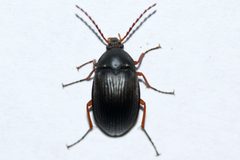
Pseudocistela brevis is a of darkling beetle (Tenebrionidae) first described by Thomas Say in 1824. The species is documented from eastern Canada, with confirmed records in New Brunswick, Ontario, and Quebec. Like other members of the Pseudocistela, it belongs to a group of small to medium-sized beetles associated with forest floor and decaying organic matter.
Pronunciation
How to pronounce Pseudocistela brevis: /ˌsjuːdoʊsɪˈstiːlə ˈbrɛvɪs/
These audio files are automatically generated. While they are not always 100% accurate, they are a good starting point.
Identification
Pseudocistela brevis can be distinguished from by its relatively short , as indicated by the specific epithet "brevis" (Latin for "short"). The Pseudocistela is characterized by a compact body form, , and smooth or lightly sculptured elytra. Accurate identification to level typically requires examination of genitalic structures and comparison with .
Images
Habitat
Based on -level associations and collection records, P. brevis inhabits forest floor environments in temperate deciduous and mixed forests. Members of this genus are typically found in leaf litter, under bark, and in association with decaying wood and fungi.
Distribution
Documented from eastern Canada: New Brunswick, Ontario, and Quebec. The distribution appears restricted to the northeastern Nearctic region, though comprehensive survey data is limited.
Ecological Role
As a member of the Tenebrionidae, P. brevis likely contributes to nutrient cycling in forest through consumption and processing of decaying plant material and fungi.
Similar Taxa
- Pseudocistela ceramboidesSimilar compact body form and preferences; distinguished by differences in elytral length and proportions, as well as subtle differences in antennal structure.
- Other small Tenebrionidae genera (e.g., Cistela, Lobophora)May be confused due to general similarity in size and ; Pseudocistela is distinguished by specific combinations of antennal and tarsal characters, as well as pronotal shape.
More Details
Taxonomic History
The was originally described by Thomas Say in 1824, a foundational figure in North American entomology. The Pseudocistela has undergone taxonomic revision, with some species previously placed in related genera such as Cistela.
Data Gaps
Detailed biological information for P. brevis is sparse in the accessible literature. Most knowledge of the is derived from specimen records and extrapolation from better-studied . The 39 iNaturalist observations suggest the species is encountered with moderate frequency by naturalists in its documented range, but these records lack systematic biological documentation.
Sources and further reading
- BugGuide
- GBIF taxonomy match
- iNaturalist taxon
- Name That Bug! | Bug Squad
- Secrets of the "Subnivium": Arthropod Community Thrives Beneath Winter Snowpack
- When pearly-eye meets dragonfly: Northern pearly-eye, Enodia anthedon, and clubtail dragonflies, Gomphidae spp. — Bug of the Week
- Safeguarding Biodiversity: An Entomologist's Goal as Government Policy Analyst
- New parasitoid species named in honor of the National Geographic Society
- new family | Blog