
Capnochroa
LeConte, 1862
comb-clawed beetles
Species Guides
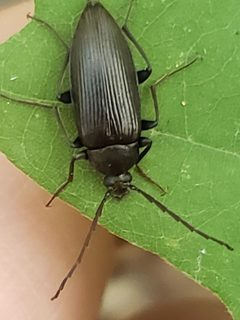
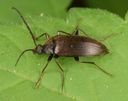
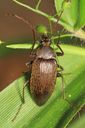
1- Capnochroa fuliginosa(Comb-clawed Beetle)
Capnochroa is a of comb-clawed beetles established by LeConte in 1862. The genus contains at least two described : C. fuliginosa and C. senilis. These beetles belong to the Tenebrionidae, a large and diverse group of darkling beetles. The genus has been documented in the northeastern United States, with records from Vermont.
Pronunciation
How to pronounce Capnochroa: //ˈkæpnəˌkroʊə//
These audio files are automatically generated. While they are not always 100% accurate, they are a good starting point.
Images
Distribution
Documented from the northeastern United States, specifically Vermont. The likely has a broader North American distribution given the widespread occurrence of related tenebrionid beetles, but confirmed records are limited.
More Details
Taxonomic history
The name Capnochroa has been used in different taxonomic contexts. In the Catalogue of Life, 'capnochroa' appears as a specific epithet for Metasia capnochroa (Meyrick, 1884), a in the Crambidae (Lepidoptera). This is a homonym and unrelated to the genus Capnochroa LeConte, 1862. The beetle genus remains valid in Tenebrionidae.
Species composition
Two are currently recognized: Capnochroa fuliginosa (Melsheimer) and Capnochroa senilis Wickham, 1913. The specific epithet 'fuliginosa' suggests a sooty or smoky coloration, while 'senilis' (Latin for 'old' or 'senile') may refer to morphological characteristics of the .
Observation data
The has accumulated 924 observations on iNaturalist, indicating moderate levels of detection and documentation by naturalists, though many of these may not be identified to level.