
Hymenorus
Mulsant, 1852
comb-clawed beetles
Species Guides
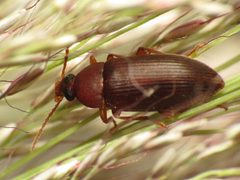
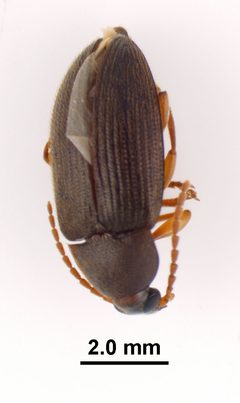
19Hymenorus is a of comb-clawed beetles in the Tenebrionidae, containing more than 160 described . These beetles were formerly classified in their own family Alleculidae but are now recognized as a within Tenebrionidae. They are characterized by their distinctive and do not conform to the typical appearance of 'classic' darkling beetles.
Pronunciation
How to pronounce Hymenorus: /haɪˈmɛnərəs/
These audio files are automatically generated. While they are not always 100% accurate, they are a good starting point.
Identification
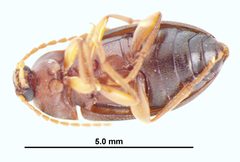
Hymenorus can be distinguished from ground beetles (Carabidae) by their bead-like segments and concealed . Within Tenebrionidae, they differ from 'classic' darkling beetles like Eleodes by their more slender build and lack of dense, armor-like . They may be confused with long-jointed beetles (Lagriinae), another group formerly classified separately but now within Tenebrionidae. Examination of tarsal claws (comb-like structure) may aid identification to level.
Images
Distribution
Records exist from Vermont, USA and other parts of the United States. Specific range boundaries are poorly documented.
Similar Taxa
- Lagriinae (long-jointed beetles)Another group formerly classified as a separate but now placed in Tenebrionidae; shares the non-classic darkling beetle appearance and was historically grouped with Alleculinae
- Eleodes and related generaClassic darkling beetles with dense and often -standing defensive ; Hymenorus lacks these characteristics
- Carabidae (ground beetles)Easily confused due to similar size and ground-dwelling habits, but distinguished by filament-like and exposed forward-directed
More Details
Taxonomic History
Hymenorus and other comb-clawed beetles were formerly classified in the Alleculidae, but molecular and morphological studies led to their reclassification as the Alleculinae within Tenebrionidae. This explains why older literature may refer to 'Alleculidae' when discussing this .
Species Diversity
With over 160 described , Hymenorus represents a diverse , yet individual species remain poorly studied and difficult to identify without specialized keys or dissection.