
Cephaloon
Newman, 1838
false longhorn beetles
Species Guides
5- Cephaloon bicolor
- Cephaloon lepturides(False Leptura Beetle)
- Cephaloon tenuicorne(false longhorn beetle)
- Cephaloon ungulare(false longhorn beetle)
- Cephaloon vandykei(false longhorn beetle)
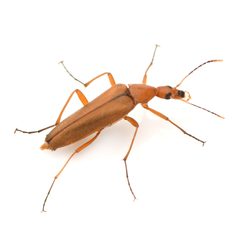
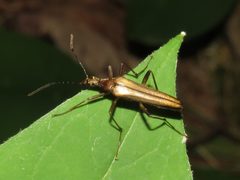
Cephaloon is a of false longhorn beetles in the Stenotrachelidae, containing approximately six described . These beetles belong to the superfamily Tenebrionoidea and are distributed in North America. The genus was established by Newman in 1838. Cephaloon species are sometimes referred to as false leptura beetles due to their resemblance to longhorn beetles in the genus Leptura.
Pronunciation
How to pronounce Cephaloon: //ˌsɛfəˈloʊ.ɒn//
These audio files are automatically generated. While they are not always 100% accurate, they are a good starting point.
Identification
Cephaloon resemble longhorn beetles (Cerambycidae) in general form but belong to the distinct Stenotrachelidae. They can be distinguished from true longhorn beetles by features of the and structure; the name refers to the head (cephalo-) . Specific identification to species level requires examination of subtle morphological characters such as antennal length, body proportions, and coloration patterns.
Images
Distribution
North America. Documented from the United States including Vermont and the Pacific region (Cephaloon pacificum).
Similar Taxa
- LepturaCephaloon resemble Leptura longhorn beetles in body form and coloration, leading to the 'false leptura ' for C. lepturides; distinguished by -level characters of Stenotrachelidae versus Cerambycidae
- CerambycidaeTrue longhorn beetles share elongated body form and antennal proportions; separated by Stenotrachelidae characteristics including structure and wing venation
More Details
Taxonomic note
NCBI lists the as 'Cephaloidae', but this appears to be an outdated or erroneous entry; modern classifications place Cephaloon in Stenotrachelidae.
Species diversity
The six described include C. lepturides (the type species), C. bicolor, C. pacificum, C. tenuicorne, C. ungulare, and C. vandykei.