
Cephaloon lepturides
Newman, 1838
False Leptura Beetle
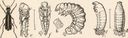
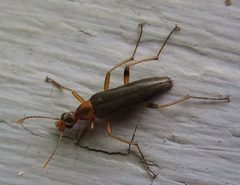
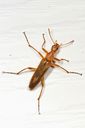
Cephaloon lepturides, known as the false leptura , is a of false longhorn beetle in the Stenotrachelidae. It is found in North America, with observations spanning multiple regions including the northeastern United States. The reflects its superficial resemblance to true leptura beetles (family Cerambycidae).
Pronunciation
How to pronounce Cephaloon lepturides: /ˈsɛfələʊˌɒn lɛpˈtjʊrɪˌdiːz/
These audio files are automatically generated. While they are not always 100% accurate, they are a good starting point.
Identification
Distinguished from true longhorn beetles (Cerambycidae) by -level characters; Stenotrachelidae lack the extremely long typical of many cerambycids and possess distinct morphological features of the false longhorn beetles. The specific epithet 'lepturides' indicates similarity to Leptura . Precise diagnostic features for field identification are not well documented in available sources.
Images
Distribution
North America; confirmed present in the United States including Vermont.
Similar Taxa
- Leptura species (Cerambycidae)True leptura beetles share similar coloration and body form, leading to the 'false leptura '; distinguished by -level morphological characters including antennal structure.
- Other Cerambycidae (longhorn beetles)Superficial resemblance due to convergent body shape; Stenotrachelidae are a distinct of false longhorn beetles separated from Cerambycidae by established taxonomic characters.
More Details
Taxonomic note
NCBI lists the as 'Cephaloidae', but this appears to be an outdated or alternative classification; current accepted family placement is Stenotrachelidae per GBIF and other sources.
Observation data
iNaturalist records 949 observations, indicating this is a moderately well-documented with active citizen science engagement.