
Ripiphorus sexdens
Linsley & MacSwain, 1950
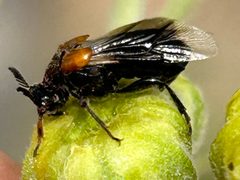
Ripiphorus sexdens is a of wedge-shaped beetle in the Ripiphoridae. It is found in North America. Members of the Ripiphorus are known for their distinctive body shape and unusual strategies, though species-specific details for R. sexdens remain limited in published literature.
Pronunciation
How to pronounce Ripiphorus sexdens: //rɪˈpɪfɔːrəs ˈsɛksˌdɛnz//
These audio files are automatically generated. While they are not always 100% accurate, they are a good starting point.
Identification
Identification of Ripiphorus sexdens requires examination of morphological features distinguishing it from . The was described by Linsley & MacSwain in 1950. Accurate identification typically depends on detailed examination of genitalia and other subtle structural characters. Consultation of the original description or specialized taxonomic keys for Ripiphorus is necessary for reliable determination.
Images
Distribution
North America. Specific range details within North America are not well documented in readily available sources.
Similar Taxa
- Other Ripiphorus speciesCongeneric share the distinctive wedge-shaped body form and general , requiring careful examination for accurate identification.
- Other Ripiphoridae genera members share the characteristic wedge-shaped body and reduced typical of the family, though -level differences in antennal structure and body proportions aid separation.
More Details
Taxonomic note
Ripiphorus sexdens was described by Linsley & MacSwain in 1950. The Ripiphorus ( Ripiphoridae) comprises wedge-shaped beetles with unusual , often involving and parasitic relationships with other insects, though the specific of R. sexdens has not been detailed in accessible literature.
Data limitations
Available information for this is extremely limited. The GBIF database and iNaturalist each record fewer than 10 observations or records. No peer-reviewed studies specifically addressing the , , or of R. sexdens were identified in the provided source material.
Sources and further reading
- BugGuide
- Wikipedia
- GBIF taxonomy match
- iNaturalist taxon
- Ants and Science Are Her Passions | Bug Squad
- Atta sexdens ant with bacterial colonies on exoskeleton - Entomology Today
- Why Fungus-Farming Ants Could Be a Source for New Antimicrobial Compounds
- Wiwi gardeners - Leafcutter ants, Atta sp. — Bug of the Week
- Tropical fungus gardeners - Leafcutter ants: Atta and Acromyrmex spp. — Bug of the Week