
Typhaea
Stephens, 1829
Species Guides
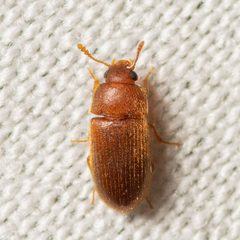
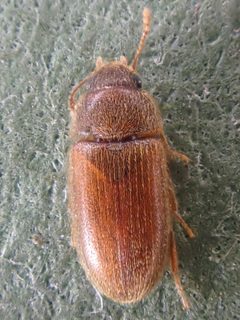
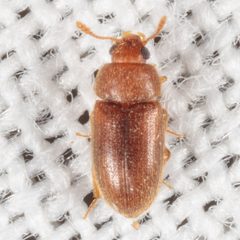
1- Typhaea stercorea(Hairy Fungus Beetle)
Typhaea is a of small beetles in the Mycetophagidae (hairy fungus beetles), established by Stephens in 1829. The genus includes at least five described , with Typhaea stercorea being the most studied due to its economic importance as a stored grain pest. Members of this genus are associated with fungal and are found in stored products and field environments.
Pronunciation
How to pronounce Typhaea: /taɪˈfiːə/
These audio files are automatically generated. While they are not always 100% accurate, they are a good starting point.
Identification
Typhaea are small beetles in the Mycetophagidae, distinguished from similar by their association with the tribe Typhaeini. Species-level identification requires examination of morphological characters; the includes both widespread (T. stercorea, T. angusta) and geographically restricted species (T. africana, T. hirta, T. decipiens).
Images
Habitat
Associated with fungal-infested organic matter. Typhaea stercorea occurs in stored grain facilities and moldy agricultural products. Field have been documented in maize fields using fungal attractants.
Distribution
Documented from Europe (Denmark, Norway, Sweden), North America (United States, including Vermont), and Africa (T. africana). Distribution varies by : T. stercorea is widespread in stored products globally, while other species have more restricted ranges.
Diet
For Typhaea stercorea: feeds on fungi growing on stored grains, particularly Aspergillus, Eurotium, and Penicillium. Fungi provide essential sterols required for growth and . Diet for other Typhaea is not documented.
Life Cycle
For Typhaea stercorea: development includes larval and stages. Larval development period varies with fungal diet, being shortest on Aspergillus. details for other Typhaea are not documented.
Behavior
Typhaea stercorea serves as a of mycotoxigenic fungi throughout storage structures and can tolerate high levels of mycotoxins that are toxic to humans and other animals. Behavioral data for other Typhaea are not available.
Ecological Role
Typhaea stercorea acts as a secondary post-harvest pest and of mycotoxigenic fungi in stored grain . Gut-associated bacteria (including Pseudomonas and Enterobacteriaceae) may contribute to digestion of fungal material. Ecological roles of other Typhaea are not documented.
Human Relevance
Typhaea stercorea is an economically significant post-harvest pest of stored grains. It mycotoxigenic fungi including Aspergillus flavus, contributing to mycotoxin of food products.
Similar Taxa
- Other Mycetophagidae generaShare similar small body size and association with fungi; distinguished by tribal and generic-level morphological characters and geographic distribution.
- Cryptophagidae (silken fungus beetles)Similar in fungal ; distinguished by -level characters including mouthpart structure and antennal club .
More Details
Gut microbiome research
A 2022 study characterized bacterial in Typhaea stercorea using 16S rRNA sequencing. Key findings: Pseudomonas dominated larval guts (47.67%) but was rare in (0.21%), while an unspecified Enterobacteriaceae dominated adults (90.97%). Microbial composition differed between life stages and between field-collected versus laboratory-reared individuals.