
Cryptophagidae
W. Kirby, 1826
silken fungus beetles
Subfamily Guides
2- Atomariinae(silken fungus beetles)
- Cryptophaginae(silken fungus beetles)
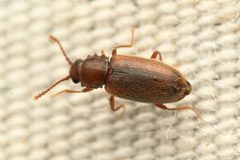
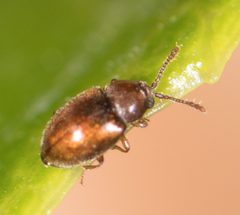
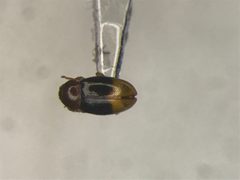
is a of small beetles commonly known as silken fungus beetles. and larvae feed exclusively on fungi across diverse including rotting wood and shed animal fur and feathers. The family contains approximately 600 in 60 divided into two : Atomariinae and Cryptophaginae. Body size ranges from 1 to 11 millimeters with an oval shape and slight waist.
Pronunciation
How to pronounce Cryptophagidae: //ˌkrɪp.təˈfæ.dʒɪ.diː//
These audio files are automatically generated. While they are not always 100% accurate, they are a good starting point.
Identification
Distinguished from other by the slight waist or constriction between the pronotum and . Separated from Erotylidae (pleasing fungus beetles), Endomychidae (handsome fungus beetles), Mycetophagidae (hairy fungus beetles), Derodontidae (tooth-necked fungus beetles), Tetratomidae (polypore fungus beetles), Archeocrypticidae (cryptic fungus beetles), and Ciidae (minute tree-fungus beetles) by this body shape feature combined with small size and association with fungi.
Images
Habitat
Associated with fungi in diverse situations including rotting wood, shed animal fur, feathers, and mushroom fruiting bodies. Found in terrestrial environments where fungal growth occurs.
Distribution
distribution with representatives in all biogeographic realms. Documented from North America, Europe, Asia (including Himalayan region of China and India), Africa (eastern mountains, Kenya), and other regions. Fossil record includes Lebanese amber (Early Cretaceous, Barremian), Taimyr amber (Late Cretaceous, Santonian), Shixi Formation (Early Cretaceous, Albian), El Soplao amber (Albian), and Baltic amber (Eocene).
Diet
and larvae feed exclusively on fungi.
Ecological Role
Primary consumers of fungi; contribute to nutrient cycling in decomposing organic matter. Serve as prey for predatory beetles such as rove beetles (Staphylinidae).
Human Relevance
Occasionally found in mushroom where they may be considered pests. Attracted to blacklight traps.
Similar Taxa
- ErotylidaeAlso fungus-feeding beetles but lack the slight waist characteristic of ; often more brightly colored
- EndomychidaeSimilar but body form differs; lack the constricted waist
- MycetophagidaeHairy fungus beetles with different body texture and proportions
- CiidaeMinute tree-fungus beetles typically associated with woody bracket fungi; more cylindrical body form
More Details
Subfamilies
Two recognized: Atomariinae (LeConte 1861) and Cryptophaginae (Kirby 1837)
Fossil Record
Extinct documented from Cretaceous and Eocene ambers including Lebanophytum, Nganasania, Shixitomaria, Albocryptophagus, Ennoticus, Microticus, and Spaniophagus
Research Note
Alfieriella senguptai from the Himalayas represents the largest member of its and conforms to regarding body size in cold, high-altitude environments
Sources and further reading
- BugGuide
- Wikipedia
- GBIF taxonomy match
- iNaturalist taxon
- NCBI Taxonomy
- Catalogue of Life
- Bug Eric: Fungus Party-y-y!
- Bug Eric: 2022
- Bug Eric: Last Night to Blacklight?
- A new Himalayan species of Alfieriella (Coleoptera: Cryptophagidae)
- Neomicrambe subgen. nov. of Micrambe Thomson, 1863 (Coleoptera: Cryptophagidae) from East Africa