Typhaea stercorea
(Linnaeus, 1758)
Hairy Fungus Beetle
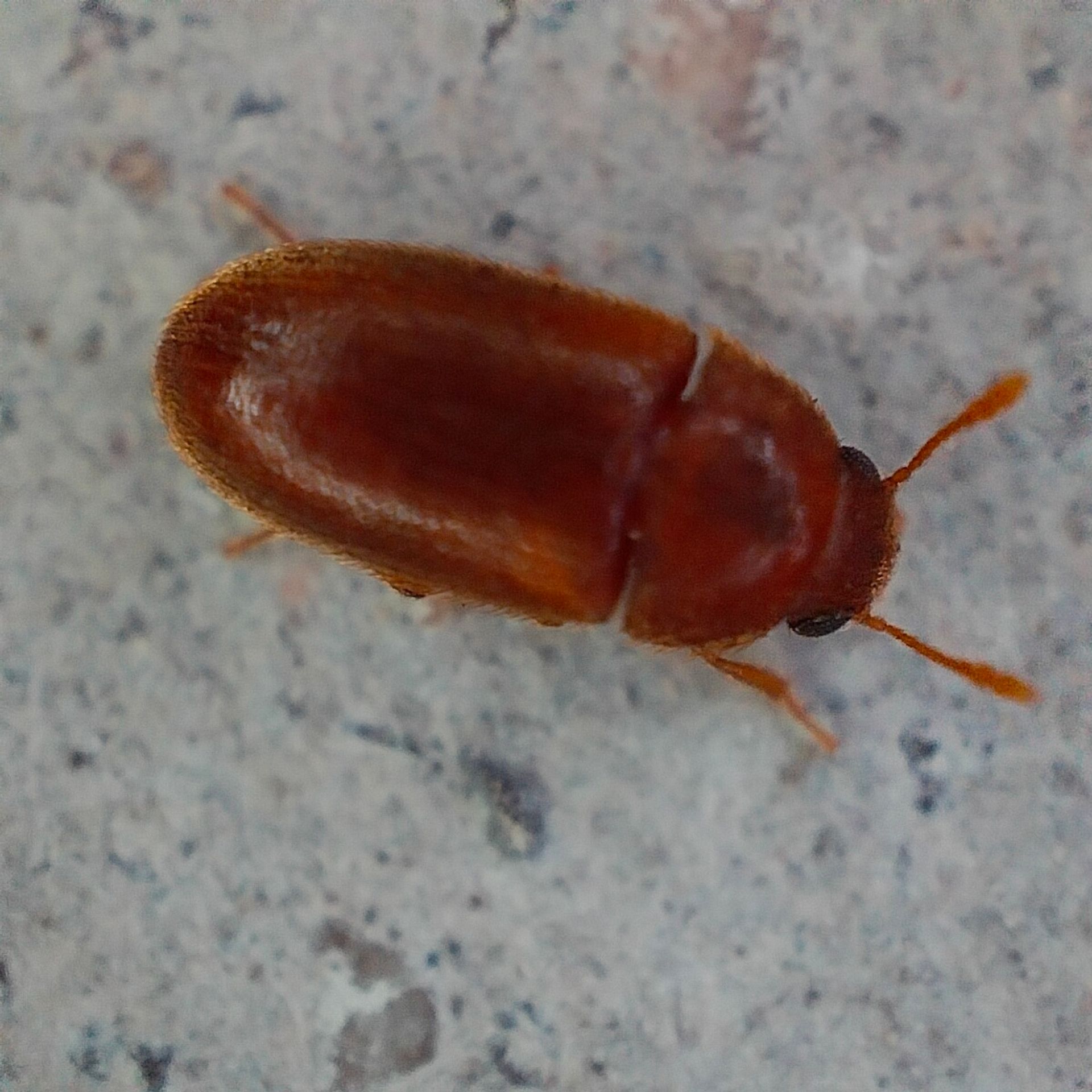
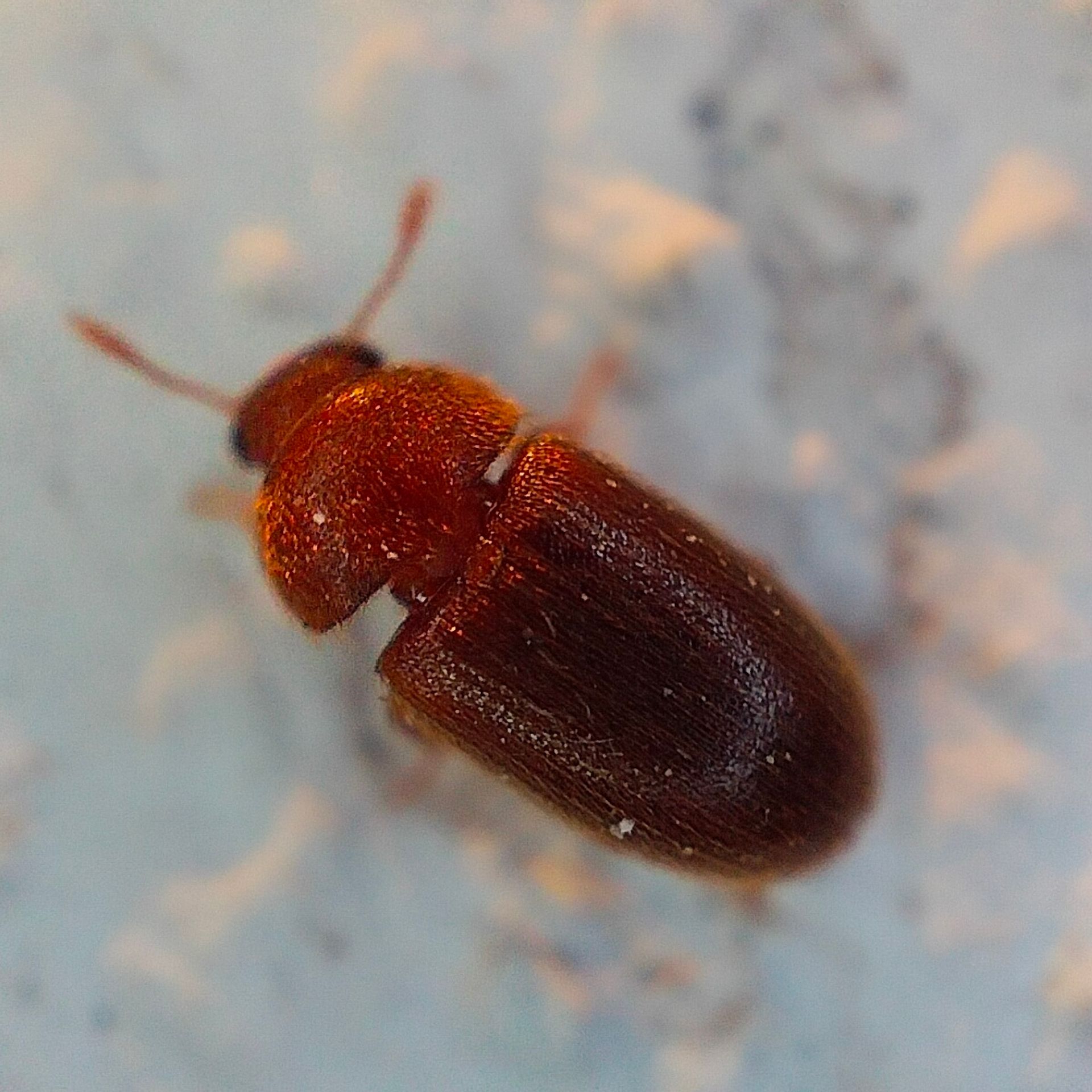
Typhaea stercorea, commonly known as the hairy fungus beetle, is a in the Mycetophagidae. measure 2.2–3.0 mm in length and are distinguished by their oval, brown, flattened bodies with hairy bearing parallel lines of fine hairs. The is a feeder on fungi, particularly molds growing on damp or deteriorating organic matter. It serves as a significant pest of stored grain products, where its presence indicates poor storage conditions, and has been documented in grain storages dating to the Iron Age. The beetle has gained additional attention as a of human , including documented carriage of Salmonella enterica and Campylobacter species.
Pronunciation
How to pronounce Typhaea stercorea: /tɪˈfiːə ˌstɛrkɔˈreɪə/
These audio files are automatically generated. While they are not always 100% accurate, they are a good starting point.
Identification
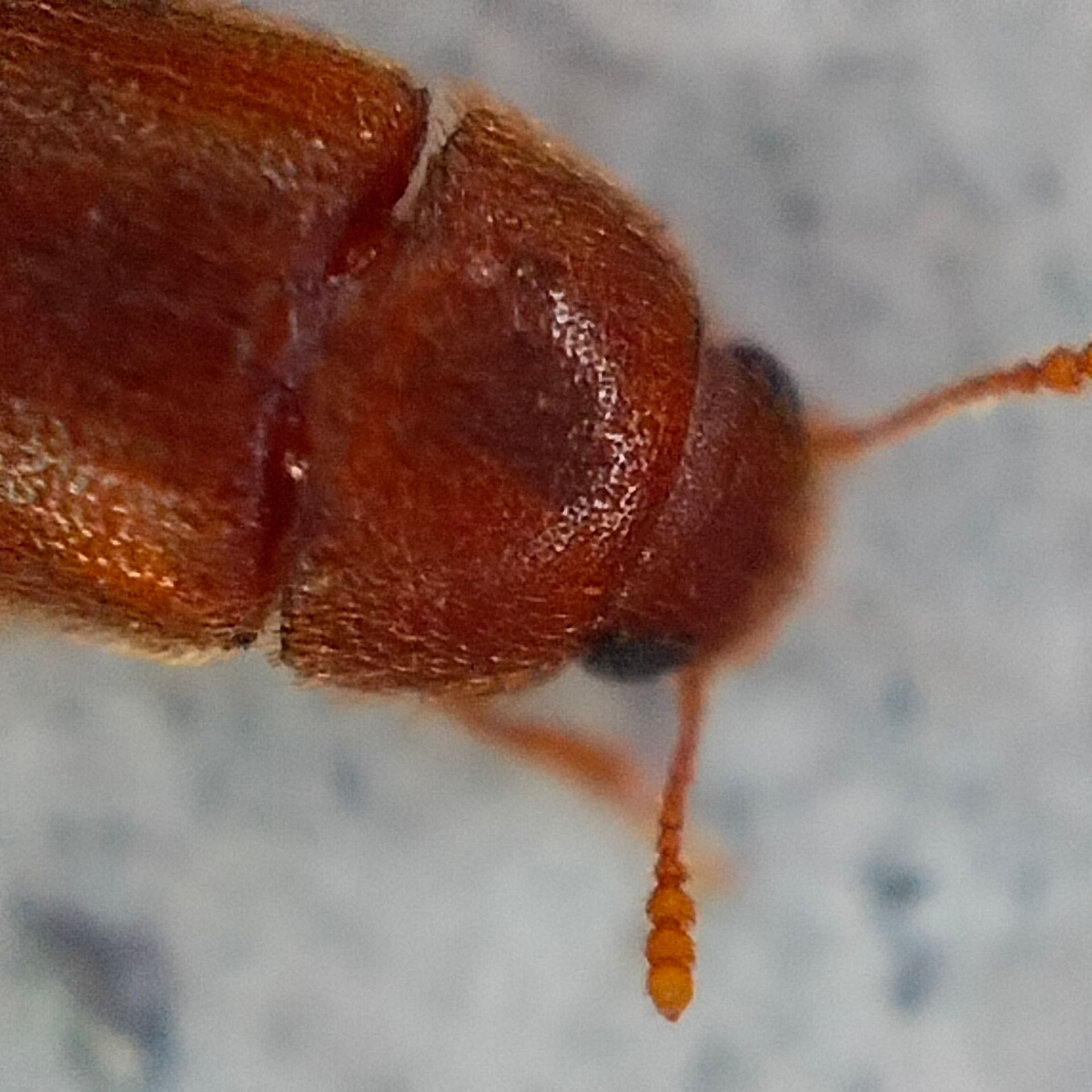
are 2.2–3.0 mm long, oval, brown, and distinctly flattened. The are covered with hairs arranged in parallel lines. The are 3-segmented, and the is readily visible from above—this latter trait distinguishes T. stercorea from some similar in related . The overall hairy appearance of the elytra is diagnostic for the and affiliation.
Images
Habitat
Found in environments with moldy or damp conditions. Occurs on ripening hay and grain crops before harvest in both temperate and tropical regions. In storage contexts, inhabits grain bins, warehouses, and other structures where fungal growth develops on organic substrates.
Distribution
distribution. Recorded across temperate and tropical regions worldwide. Specific documented locations include North America (USA: Indiana, Ohio, Kansas), Europe (Denmark), and the Azores (Faial, Flores, Graciosa, Pico, São Miguel).
Diet
Feeds primarily on fungi growing on damp or moldy organic matter. Documented consumption of molds on cereals, tobacco, peanuts, and hay. Completes lifecycle on fungal Aspergillus, Eurotium, and Penicillium. Can develop on high levels of mycotoxins produced by Aspergillus flavus.
Life Cycle
Development from to takes 21 to 33 days at 25°C and 80–90% relative humidity. Larvae are mobile and active. The can complete its entire lifecycle on fungal diets alone, with faster development and higher reproductive output when feeding on Aspergillus compared to Eurotium or Penicillium.
Behavior
run fast and fly well. Both adults and larvae feed actively, causing non-distinctive damage to stored products. Serves as a of mycotoxigenic fungi throughout storage structures. Has been documented carrying Salmonella enterica serovar Infantis, Salmonella enterica, and Campylobacter ; in one documented case, introduced Salmonella into a Danish broiler house, infecting 39,900 chicks through ingestion of beetles.
Ecological Role
Secondary post-harvest pest of stored grains. Contributes to degradation of fungal in storage . Acts as a for mycotoxigenic fungi and potentially for pathogenic bacteria in agricultural settings.
Human Relevance
Minor pest of freshly harvested or slightly damp grain. Presence in stored grain indicates poor storage conditions. Documented of foodborne (Salmonella and Campylobacter), with potential significance for poultry production and food safety. Archaeological significance: found in grain storages dating to the Iron Age.
Similar Taxa
- Other MycetophagidaeDistinguished by visible from above and 3-segmented ; some similar have concealed heads or different antennal segmentation.