
Typhaeini
C.G. Thomson, 1863
Genus Guides
3- Neotriphyllus
- Thrimolus(hairy fungus beetles)
- Typhaea
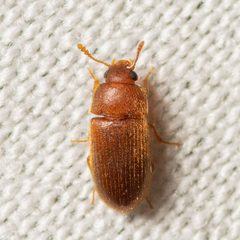
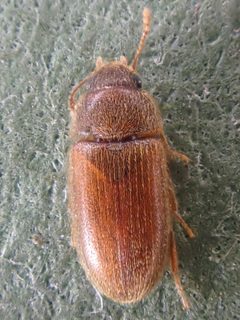
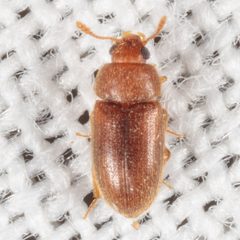
Typhaeini is a tribe of small to medium-sized beetles within the Mycetophagidae, commonly known as hairy fungus beetles. Members of this tribe are characterized by their association with fungal substrates and are primarily distributed in the Holarctic region. The tribe was established by Carl Gustaf Thomson in 1863 and includes such as Typhaea and related .
Pronunciation
How to pronounce Typhaeini: //tɪˈfiː.ɪˌnaɪ//
These audio files are automatically generated. While they are not always 100% accurate, they are a good starting point.
Identification
Typhaeini can be distinguished from other mycetophagine tribes by the combination of elongate body form, pronotum with lateral margins not or only weakly explanate, and with a weakly to moderately developed club. The tarsal formula is 5-5-4 in males and 5-5-4 or 4-4-4 in females. Members lack the strongly flattened and expanded body margins seen in some related groups such as certain Litargini.
Images
Habitat
in this tribe inhabit environments rich in decaying organic matter, particularly where fungi are abundant. This includes rotting wood, leaf litter, compost, stored grain products, and other substrates supporting mold growth. Some species have adapted to environments.
Distribution
Primarily Holarctic in distribution, with records from Europe, Asia, and North America. Some have become through human commerce, particularly those associated with stored products.
Diet
Feeds on fungal and spores. The tribe is obligately mycophagous, with consuming a range of mold fungi including Aspergillus, Penicillium, and related .
Host Associations
- Aspergillus - food sourcemold fungi consumed as food
- Penicillium - food sourcemold fungi consumed as food
Ecological Role
Acts as a decomposer in by consuming fungal , potentially influencing fungal composition and spore . In stored product environments, some may serve as indicators of mold .
Human Relevance
Some are minor pests of stored products, particularly grains and oilseeds, where their presence indicates mold growth and potential deterioration of food quality. They are not directly damaging to the products themselves but signal conditions favorable to more serious pests or mycotoxin-producing fungi.
Similar Taxa
- MycetophaginiOverlaps in and general appearance; distinguished by more strongly developed antennal club and different pronotal structure
- LitarginiRelated tribe with some convergent features; Litargini typically have more strongly explanate body margins and different tarsal structure
More Details
Taxonomic history
The tribal classification of Mycetophagidae has undergone revision, with Typhaeini sometimes treated more broadly or narrowly depending on author. Current concepts generally follow the circumscription established in modern catalogs.