
Mordella
Linnaeus, 1758
tumbling flower beetles
Species Guides
13- Mordella albosuturalis
- Mordella atrata(Tumbling Mourner)
- Mordella hubbsi
- Mordella insulata
- Mordella knulli
- Mordella lunulata
- Mordella marginata(Tumbling Ragdoll Flower Beetle)
- Mordella melaena(Tumbling Nun)
- Mordella mexicana
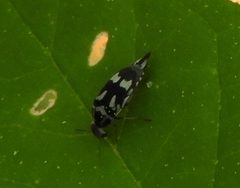
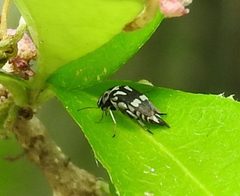
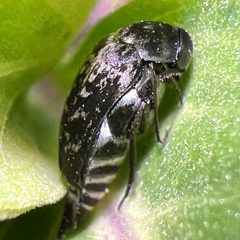
Mordella is the type of the tumbling flower beetle Mordellidae. in this genus occur on every continent except Antarctica, with broad distribution in the Holarctic region. The larvae are primarily borers in dead wood. are commonly found on flowers and exhibit the characteristic tumbling escape that gives the family its .
Pronunciation
How to pronounce Mordella: /mɔrˈdɛl.a/
These audio files are automatically generated. While they are not always 100% accurate, they are a good starting point.
Identification
Mordella can be distinguished from other mordellid by the combination of: body shape with a tapered, pointed that extends beyond the ; hind legs enlarged and modified for jumping; and with a weakly to moderately clubbed tip. The genus lacks the strongly serrate or pectinate antennae found in some related genera. Precise species-level identification requires examination of genitalic characters.
Images
Habitat
are found on flowers in diverse terrestrial . Larvae develop in dead and decaying wood, including branches, logs, and stumps of various hardwood and softwood .
Distribution
Widespread across all continents except Antarctica. Core distribution in the Holarctic region (North America, Europe, northern Asia). Records confirmed from Denmark, Norway, Sweden, and the United States (Vermont).
Host Associations
- dead wood - larval developmentLarvae are primarily borers in dead and decaying wood of various tree .
Life Cycle
Complete with , larva, pupa, and stages. Larvae are wood-borers in dead wood. occurs within the larval galleries. Adults emerge and are found on flowers.
Behavior
exhibit characteristic tumbling when disturbed: using their enlarged hind legs to jump and tumble erratically, making them difficult to capture. This is the source of the "tumbling flower beetles."
Ecological Role
Larvae contribute to wood decomposition and nutrient cycling in forest through their activity in dead wood. may incidentally visit flowers for pollen or nectar, though their role as is not well documented.
Human Relevance
No significant direct economic importance. Occasionally encountered by entomologists and naturalists due to their distinctive tumbling . Not considered a pest of living trees or timber products.
Similar Taxa
- other Mordellidae generaSimilar body form and tumbling . Mordella distinguished by antennal structure and abdominal shape; some have more strongly modified or different abdominal proportions.
- RipiphoridaeSome ripiphorid beetles have similar body shape with pointed and enlarged hind legs. Distinguished by different wing venation, antennal structure, and larval (ripiphorids are , not wood-borers).
More Details
Taxonomic significance
Mordella is the type for the Mordellidae, Mordellinae, and tribe Mordellini, making it central to the classification of this lineage.