
Pyrota obliquefascia
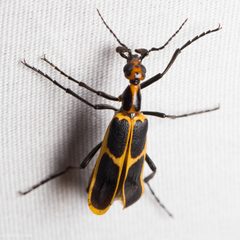
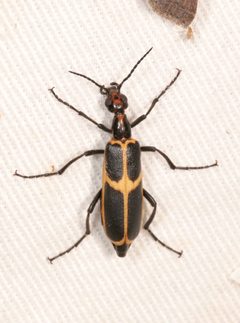
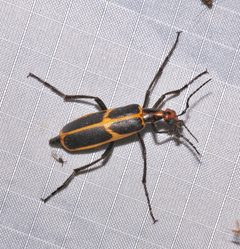
Pyrota obliquefascia is a of blister beetle in the Meloidae, tribe Pyrotini. The Pyrota includes approximately 30 species distributed primarily in North and Central America, with many species exhibiting bright aposematic coloration. Members of this genus are known for extreme size variability between sexes and the production of , a toxic defensive compound. The specific epithet 'obliquefascia' refers to an oblique band or stripe pattern on the .
Pronunciation
How to pronounce Pyrota obliquefascia: /piːˈroʊtə əˌbliːkwəˈfæʃɪə/
These audio files are automatically generated. While they are not always 100% accurate, they are a good starting point.
Identification
Pyrota are characterized by soft, flexible typical of Meloidae, thread-like , and often striking yellow-orange and black color patterns. Pyrota obliquefascia can be distinguished from by the oblique fasciate (banded) pattern on the elytra. The pronotum typically lacks the two prominent black spots seen in Pyrota bilineata. As with other Pyrota species, individuals show considerable size variation, with males often substantially smaller than females.
Images
Distribution
Pyrota obliquefascia has been recorded from the southwestern United States and Mexico. The Pyrota has its greatest diversity in the arid and semi-arid regions of western North America.
Similar Taxa
- Pyrota bilineataSimilar orange and black coloration, but distinguished by two black spots on the pronotum and straight longitudinal elytral stripes rather than oblique bands
- Pyrota palpalisAnother orange and black Pyrota with different pronotal and elytral pattern; often called the 'Charlie Brown blister beetle' due to its distinctive markings