
Pleuropasta mirabilis
(Horn, 1870)
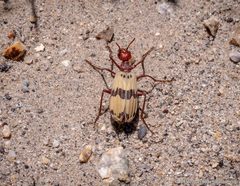
Pleuropasta mirabilis is a blister beetle in the Meloidae, first described by Horn in 1870. The belongs to the tribe Eupomphini, a group of meloid beetles characterized by aposematic coloration and chemical defenses. It occurs in both Central America and North America. The Pleuropasta contains at least two recognized species, with P. mirabilis being the more widespread and well-collected of the two.
Pronunciation
How to pronounce Pleuropasta mirabilis: //ˌplʊəroʊˈpæstə mɪˈræbɪlɪs//
These audio files are automatically generated. While they are not always 100% accurate, they are a good starting point.
Identification
Distinguished from the congeneric Pleuropasta reticulata by distribution and subtle morphological differences; P. reticulata is known only from the western United States (California region based on Van Dyke's description) while P. mirabilis has a broader transcontinental range. Within the tribe Eupomphini, Pleuropasta can be separated from related such as Eupompha, Megetra, and Tegrodera by specific combinations of elytral sculpturing, body proportions, and color pattern. The specific epithet 'mirabilis' (Latin for 'wonderful' or 'extraordinary') was presumably applied by Horn to denote notable or distinctive features of the species.
Images
Distribution
Central America and North America. Museum holdings indicate substantial representation across this range, with 307 specimens documented in the Entomology Research Museum collection.
Similar Taxa
- Pleuropasta reticulataCongeneric described by Van Dyke, distinguished by more restricted western distribution (34 specimens in museum holdings versus 307 for P. mirabilis) and subtle differences in elytral reticulation pattern.
- Eupompha elegansSympatric eupomphine with which it shares general body form and aposematic tendencies, but distinguished by distinct color pattern and elytral structure.
- Megetra cancellataRelated eupomphine with similar size range, separable by differences in pronotal and elytral sculpturing.