
Epicauta callosa
LeConte, 1866
Spot-necked Epicauta
Epicauta callosa is a blister beetle in the Meloidae, commonly known as the Spot-necked Epicauta. It occurs in Central America and North America. Like other members of the Epicauta, it possesses the characteristic chemical defense of blister beetles: the ability to produce , a potent irritant compound. The species was described by LeConte in 1866 and is represented in museum collections with moderate specimen numbers.
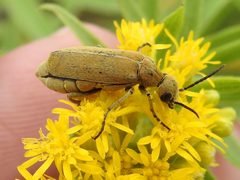
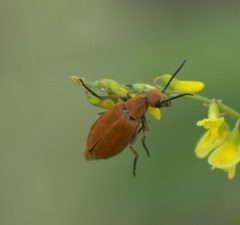
Pronunciation
How to pronounce Epicauta callosa: /ˌɛpɪˈkaʊtə kəˈloʊsə/
These audio files are automatically generated. While they are not always 100% accurate, they are a good starting point.
Images
Distribution
Central America and North America. GBIF records confirm presence in Middle America and North America.
Similar Taxa
- Epicauta stuartiBoth are Epicauta with black and orange coloration patterns that participate in Müllerian mimicry complexes with soldier beetles, though E. callosa's specific pattern details differ
- Epicauta vittataAnother North American Epicauta with documented high content (5.4% dry weight), sharing the -level defensive chemistry and general body form
Sources and further reading
- BugGuide
- Wikipedia
- GBIF taxonomy match
- iNaturalist taxon
- Meloidae Holdings | Entomology Research Museum
- predator avoidance | Beetles In The Bush | Page 7
- What Puts the Blister Into Blister Beetles?
- 9th Annual Fall Tiger Beetle Trip: Day 3.2 | Beetles In The Bush
- Sphingidae | Beetles In The Bush | Page 2
- Bug Eric: A Beetle Mimicry Complex