Epicauta brunnea
Werner, 1944
blister beetle
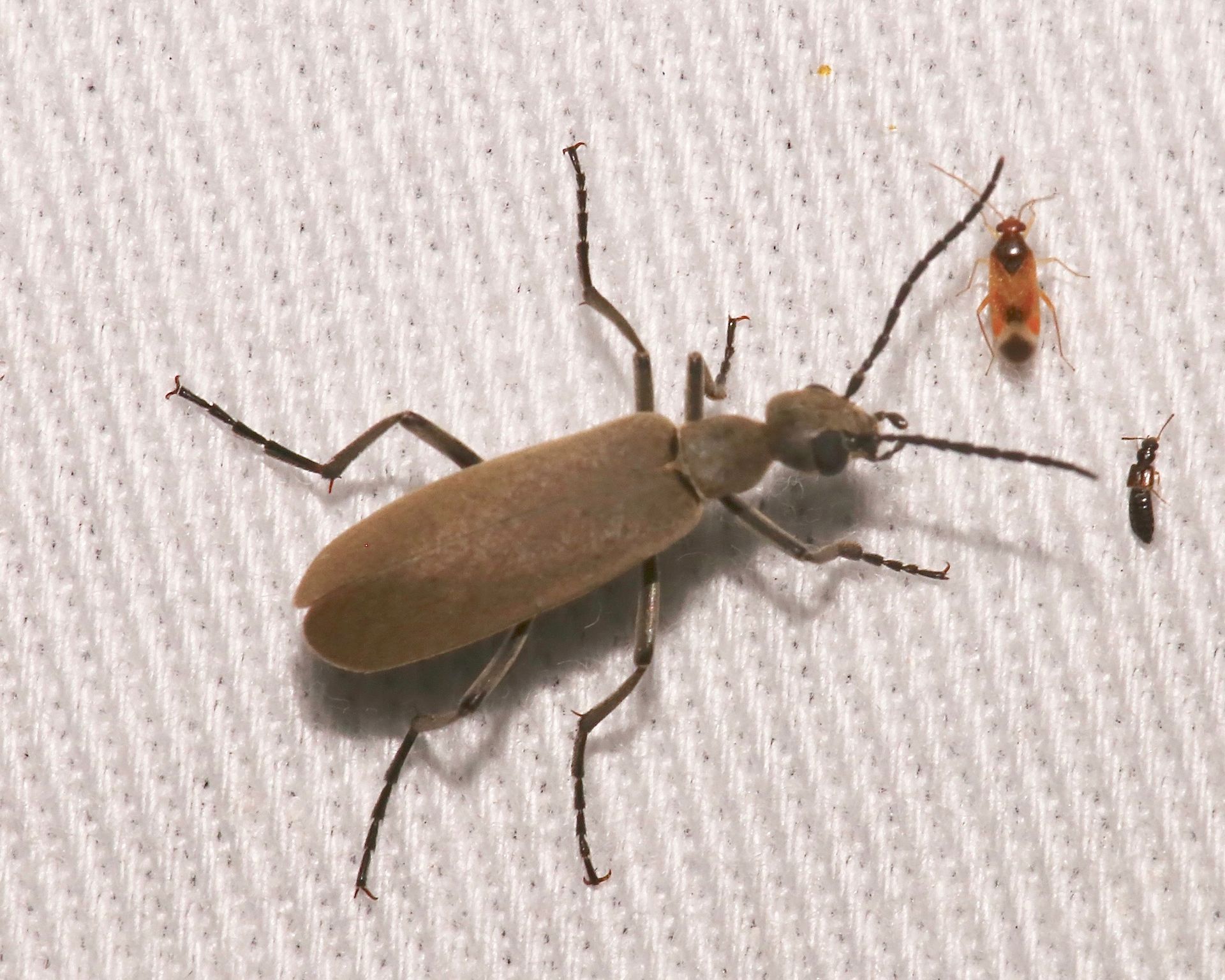
Epicauta brunnea is a of blister beetle in the Meloidae, first described by Werner in 1944. It is distributed across Central America and North America. Like other members of the Epicauta, it produces , a defensive terpenoid compound that is toxic to most vertebrates and causes blistering upon contact with skin.
Pronunciation
How to pronounce Epicauta brunnea: /ˌɛpɪˈkaʊtə ˈbrʊniə/
These audio files are automatically generated. While they are not always 100% accurate, they are a good starting point.
Images
Distribution
Central America and North America. The has been recorded in both Middle America and North America regions according to GBIF distribution data.
Ecological Role
As a member of the Epicauta, this likely contributes to -based chemical defense in . Epicauta species are known to have triungulin larvae that parasitize pods, potentially influencing grasshopper .
Human Relevance
Epicauta blister beetles can be agricultural pests when present in alfalfa hay, where they pose risks to horses and livestock due to content. However, specific documented cases involving E. brunnea are not available in the provided sources.
Similar Taxa
- Epicauta vittataBoth are grayish Epicauta found in North America; E. vittata is one of the most well-studied species in the with documented high content (5.4% dry weight), and shares similar general and .
- Epicauta pensylvanicaAnother common North American Epicauta with similar body plan and coloration; both are frequently found on Asteraceae flowers and can be difficult to distinguish without close examination.
More Details
Sources and further reading
- BugGuide
- Wikipedia
- GBIF taxonomy match
- iNaturalist taxon
- Meloidae Holdings | Entomology Research Museum
- Ever Seen a Mantidfly? | Bug Squad
- Bug Eric: Wasp Mantisfly
- What Puts the Blister Into Blister Beetles?
- When is a stag beetle not a stag beetle? | Beetles In The Bush
- Meloidae | Beetles In The Bush | Page 3