
Scotochroa basalis
LeConte, 1874
Basal False Darkling Beetle
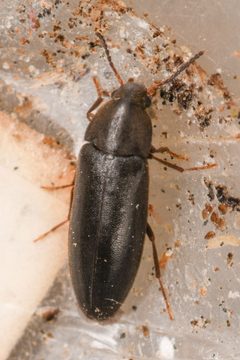
Scotochroa basalis is a of in the Melandryidae, first described by John Lawrence LeConte in 1874. It is known from western and central Canada, with confirmed records in Alberta, British Columbia, and Newfoundland. The species is rarely encountered, with only five observations documented on iNaturalist as of the available data. Like other members of Melandryidae, it likely inhabits forested environments where it develops in decaying wood.
Pronunciation
How to pronounce Scotochroa basalis: /ˌskoʊ.toʊˈkroʊ.ə bəˈseɪ.lɪs/
These audio files are automatically generated. While they are not always 100% accurate, they are a good starting point.
Identification
Identification of Scotochroa basalis requires examination of detailed morphological characters. Members of the Scotochroa can be distinguished from other Melandryidae by genitalic and elytral characteristics, though specific diagnostic features for S. basalis are not documented in the provided sources. The epithet "basalis" may refer to a basal marking or structural feature, but this is speculative without original description access.
Images
Habitat
Based on -level and distribution records, S. basalis likely inhabits coniferous or mixed forests in and montane regions. Melandryidae beetles typically develop in decaying wood, particularly coniferous logs and stumps. The has been recorded at elevations and latitudes consistent with temperate to subarctic forest zones in western Canada.
Distribution
Confirmed records from Alberta, British Columbia, and Newfoundland, Canada. The disjunct distribution between western Canada (Alberta, British Columbia) and eastern Canada (Newfoundland) suggests either a broader range with under-sampling or relict . No United States records are documented in the available sources.
Ecological Role
As a member of Melandryidae, S. basalis likely functions as a decomposer in forest , contributing to wood decay processes. Larval development in dead wood facilitates nutrient cycling and creates for other organisms.
Human Relevance
No direct human relevance documented. The is not known to be of economic importance, either as a pest or beneficial organism. Its rarity in collections and observations suggests it is not commonly encountered by the public.
Similar Taxa
- Other Scotochroa speciesCongeneric share general and preferences; accurate identification requires examination of male genitalia and subtle elytral patterns
- Other Melandryidae generaFalse darkling beetles in related (e.g., Melandrya, Orchesia) occupy similar in decaying wood; separation requires detailed morphological study
More Details
Taxonomic note
The Scotochroa was established by LeConte and currently contains few described . The Melandryidae (false darkling beetles) is a small family of Tenebrionoidea, historically understudied in North America.
Data deficiency
This is exceptionally poorly documented in publicly available sources. The five iNaturalist observations and sparse GBIF records indicate either genuine rarity, cryptic habits, or under-collection due to inaccessibility or lack of targeted survey.