
Vacusus
Casey, 1895
Species Guides
7- Vacusus confinis
- Vacusus formicetorum(Saskatchewan Ant-like Flower Beetle)
- Vacusus infernus
- Vacusus nigritulus
- Vacusus parvus
- Vacusus
- Vacusus vicinus(Common Anthicid)
Vacusus is a of antlike flower beetles in the Anthicidae, established by Casey in 1895. The genus comprises approximately six described distributed across the Americas, including North America, the Caribbean, and Central America. Members of this genus exhibit the characteristic -mimicking typical of Anthicidae, with elongated bodies and pronotal constrictions that create a superficial resemblance to ants. The genus has accumulated over 950 observations on iNaturalist, indicating moderate documentation of its species in the field.
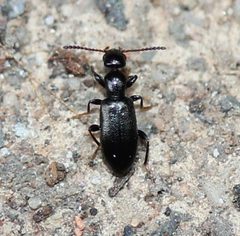
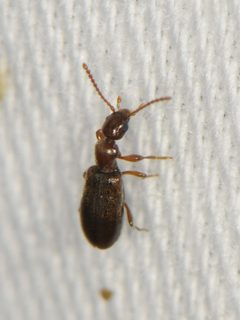
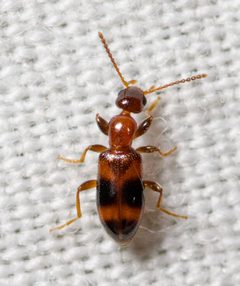
Pronunciation
How to pronounce Vacusus: /vəˈkuːsəs/
These audio files are automatically generated. While they are not always 100% accurate, they are a good starting point.
Identification
in Vacusus can be distinguished from other Anthicidae by the combination of: antennal structure (typically with eleven segments); pronotal shape with distinct constriction; and elytral punctation patterns. Within the genus, species are differentiated primarily by body size, coloration (ranging from pale to dark brown or black), and subtle differences in pronotal and elytral proportions. Vacusus confinis and V. nigritulus, both described by LeConte in 1851, may be confused but differ in body length and degree of elytral .
Images
Habitat
in this have been recorded in association with colonies, as suggested by the specific epithet formicetorum (meaning 'of ant nests'). Vacusus infernus has been documented from subterranean or cave-like environments, as indicated by its species name. Other species occupy ground-level in forested and open terrestrial environments where ant species occur.
Distribution
The occurs in the Nearctic and Neotropical regions. Documented distributions include: eastern and central North America (V. confinis, V. nigritulus, V. vicinus); the Caribbean (V. jamaicanus, to Jamaica); and Central America (V. infernus, V. formicetorum).
Host Associations
- Formicidae - commensalVacusus formicetorum and likely other occur in nests, though the nature of the relationship remains poorly documented.
Similar Taxa
- Formicidae (ants)Vacusus are mimics with convergent body shape, including constricted 'waist' (pronotum), resulting in frequent misidentification as ants in the field.
- Other Anthicidae genera (e.g., Anthicus, Notoxus)Share -level characters of antlike flower beetles; Vacusus differs in specific pronotal and antennal proportions that require detailed examination to distinguish.
More Details
Taxonomic history
The was established by Casey in 1895, with originally described under other genera (particularly Anthicus) subsequently transferred to Vacusus. The type species is Vacusus vicinus (LaFerté-Sénectère, 1849), originally described as Anthicus vicinus.
Research gaps
Despite moderate observational records, fundamental of Vacusus remains undocumented: specificity, stages, and precise nature of ant nest associations are unknown for most .