
Amblyderus
LaFerté-Sénectère in P.H. Lucas, 1847
Species Guides
4- Amblyderus adventive-sp
- Amblyderus granularis
- Amblyderus pallens(pale ant-like flower beetle)
- Amblyderus parviceps
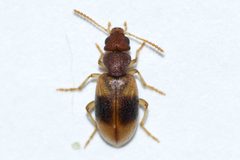
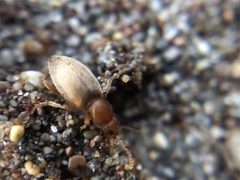
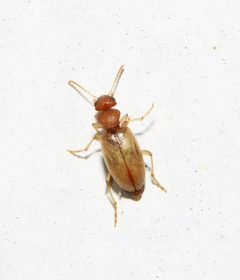
Amblyderus is a of antlike flower beetles in the Anthicidae, containing 11 described distributed primarily in North America. These beetles are part of the diverse Anthicidae family, which are commonly known as antlike flower beetles due to their resemblance to ants in size, shape, and . The genus was established by LaFerté-Sénectère in 1847.
Pronunciation
How to pronounce Amblyderus: //ˈæm.blɪˌdɪər.əs//
These audio files are automatically generated. While they are not always 100% accurate, they are a good starting point.
Identification
Members of Amblyderus can be distinguished from other anthicid by their compact, somewhat rounded body form and the structure of their and pronotum. -level identification requires examination of male genitalia and detailed morphological features including the degree of sculpturing on the and pronotum. The genus name refers to the blunt or obtuse angles of the pronotum characteristic of these beetles.
Images
Distribution
North America, with recorded from the United States and adjacent regions. Specific species have restricted ranges: Amblyderus owyhee is known from Oregon and Idaho, while Amblyderus werneri and A. triplehorni were described from Colorado.
Similar Taxa
- Formicidae (ants)Amblyderus and other anthicid beetles are frequently mistaken for ants due to in body shape, size, and erratic running . Antlike flower beetles lack the constricted petiole ( waist) of ants and have hardened forewings () not present in ants.
- Other Anthicidae generaDistinguished from related such as Anthicus and Stricticollis by pronotal shape, antennal structure, and male genitalia ; precise identification requires examination.