
Tachyporus
Gravenhorst, 1802
Species Guides
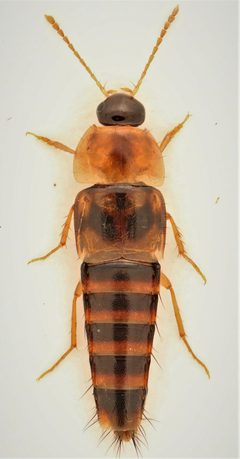
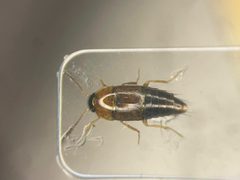
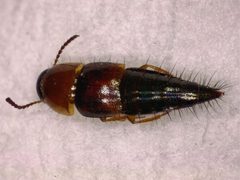
12Tachyporus is a of rove beetles (Staphylinidae) in the tribe Tachyporini, serving as the type genus for both its tribe and . The genus comprises approximately 35 in North and Central America alone, with additional species in Europe and other regions. Species such as Tachyporus hypnorum have been extensively studied for their role as in agricultural , particularly in cereal fields where they contribute to control.
Pronunciation
How to pronounce Tachyporus: /ˌtæ.kɪˈpɔːr.əs/
These audio files are automatically generated. While they are not always 100% accurate, they are a good starting point.
Images
Habitat
Arable fields and agricultural landscapes; at least some (e.g., Tachyporus hypnorum) overwinter in field margins or adjacent before dispersing into crop fields in spring. One European study documented occurrence in garden habitats.
Distribution
Widespread across North America, Central America, and Europe. North American fauna includes 35+ with distributions spanning southwestern United States, Pacific northwest, southeastern Canada, northeastern United States, and transcontinental ranges. Two European species (T. abdominalis and T. transversalis) have been reported from North America. Additional records from Denmark, Norway, Sweden, and Vermont, USA.
Seasonality
emerge in autumn, hibernate during winter, and disperse into arable fields in spring to reproduce. Spring/summer adults show higher feeding activity than adults. -laying in T. hypnorum begins approximately 200 (°C > 3) after spring from overwintering sites.
Diet
. Tachyporus hypnorum preys on aphids (Sitobion avenae, Rhopalosiphum padi), collembolans (Isotoma viridis), and fungus gnats (Sciara thomae). Shows strong preference for aphids when offered alternative prey. also consume conidia of powdery mildew (Erysiphe graminis). Under temperature stress, has been observed exhibiting anomalous phytophagous .
Life Cycle
. emerge in autumn, overwinter, and reproduce in spring. Females of T. hypnorum lay approximately 30 on average. Eggs hatch into larvae; survival is -dependent and varies with soil type (21% survival in sandy soil, 49% in clayey soil under semi-field conditions). Larval development proceeds through multiple instars before and adult .
Behavior
Foraging rates on wheat plants increase with greater and powdery mildew abundance. Capable of surviving extended periods of starvation in early spring after hibernation, though less so than some co-occurring . Exhibits strong prey preference for aphids over alternative prey items in choice experiments.
Ecological Role
contributing to natural of cereal aphids in agricultural systems. and survival rates influence potential for suppression in crop fields.
Human Relevance
Valued as a natural pest controller in cereal agriculture. Climate change-induced temperature extremes have been documented to disrupt and cause starvation stress, with potential implications for services. may be enhanced through improved conditions for development.
More Details
Taxonomic Structure
The is divided into two subgenera: Tachyporus (sensu stricto) and Palporus (described as new in the 1980 North American revision). The nominate subgenus contains 12 groups.
Prey Quality Findings
Despite strong preference for aphids, research indicates aphids are not high-quality prey for T. hypnorum compared to fruit flies (Drosophila melanogaster). Pure diets cause high larval mortality and reduced in , suggesting that optimal may require diverse prey availability.
Sources and further reading
- BugGuide
- GBIF taxonomy match
- iNaturalist taxon
- NCBI Taxonomy
- Catalogue of Life
- Reversing insect declines – a matter of personal responsibility before our own existence - Buglife Blog - Buglife
- Fecundity and juvenile survival of Bembidion lampros and Tachyporus hypnorum
- A REVISION OF THE GENUSTACHYPORUSGRAVENHORST (COLEOPTERA: STAPHYLINIDAE) OF NORTH AND CENTRAL AMERICA
- Capacity of Bembidion lampros and Tachyporus hypnorum to survive periods of starvation in early spring
- Quality of two aphid species (Rhopalosiphum padiandSitobion avenae) as food for the generalist predatorTachyporus hypnorum(Col., Staphylinidae)
- Feeding behaviour of the staphylinid beetle Tachyporus hypnorum in relation to its potential for reducing aphid numbers in wheat
- The genome sequence of a rove beetle, Tachyporus hypnorum (Fabricius, 1775) (Coleoptera: Staphylinidae).