
Stenus retrusus
(Casey, 1884)
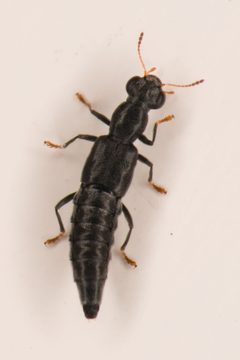
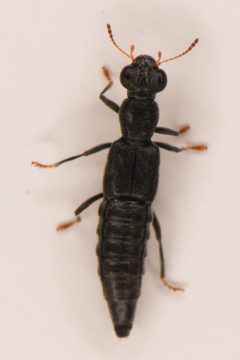
Stenus retrusus is a of rove beetle in the Steninae, Staphylinidae. Like other members of the Stenus, it possesses the distinctive labial apparatus that enables specialized predatory . The species was described by Casey in 1884 and is known from western North America, with records from Canada (British Columbia, Newfoundland and Labrador) and the United States (Alaska, Oregon, Washington, Wisconsin).
Pronunciation
How to pronounce Stenus retrusus: /ˈsteɪ.nəs rɪˈtruː.səs/
These audio files are automatically generated. While they are not always 100% accurate, they are a good starting point.
Identification
Members of the Stenus can be distinguished from other Steninae by the structure of the , which includes a long, slender rod that can be ejected using blood pressure. The paraglossae at the tip bear bristly hairs and hooks with adhesive pores. Specific identification of S. retrusus requires examination of detailed morphological features such as genitalia and body proportions; -level within Stenus typically relies on microscopic examination.
Images
Distribution
Canada: British Columbia, Newfoundland and Labrador; United States: Alaska, Oregon, Washington, Wisconsin.
Similar Taxa
- DianousOther in Steninae; all Dianous are specialized water-gliders, whereas Stenus species show variable development of this ability
- Stenus biwenxuaniAnother Stenus described from China; S. retrusus differs in geographic distribution (North America vs. Asia) and likely in detailed
- Stenus liupanshanusStenus from China found in leaf litter and believed to lack water-gliding ability; S. retrusus preferences are not documented
More Details
Taxonomic note
The was originally described by Casey in 1884. GBIF records indicate accepted status with exact name matching.
Data limitations
Only 4 observations are recorded in iNaturalist, indicating this is rarely encountered or underreported. No detailed biological studies specific to this species have been identified.