
Euconnus
Thomson, C.G., 1859
Species Guides
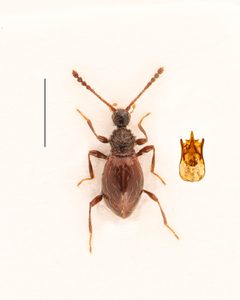
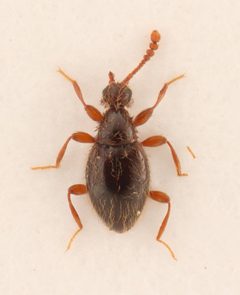
10Euconnus is a large of rove beetles in the Scydmaeninae, with over 2,500 described worldwide. The genus is characterized by small body size, typically 1–2 mm in length. Recent taxonomic revisions have reorganized its internal structure, reducing the number of recognized subgenera from 37 to fewer than 20. The genus exhibits remarkable diversity in association, including soil-dwelling, leaf litter, and cave-dwelling species.
Pronunciation
How to pronounce Euconnus: //juːˈkɒnəs//
These audio files are automatically generated. While they are not always 100% accurate, they are a good starting point.
Identification
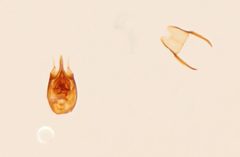
Members of Euconnus are minute beetles, usually 1–2 mm in length. The is distinguished from other scydmaenine genera by a combination of morphological characters including antennal structure, pronotal shape, and male genitalia. Subgenera are primarily distinguished by characters such as size and development, wing presence or reduction, pronotal shape, and separation of metacoxae. -level identification typically requires examination of male genitalia, particularly the shape of the and endophallic .
Images
Habitat
varies by subgenus. The subgenus Tetramelus shows adaptations to life, including reduced , lack of wings, and lightly pigmented bodies; some are specialized cave inhabitants. The subgenus Paratetramelus, characterized by large eyes and developed hind wings, occupies different microhabitats. The subgenus Cladoconnus includes species associated with forest environments in both Palearctic and Nearctic regions.
Distribution
Worldwide distribution. Subgenus Tetramelus is ; Paratetramelus occurs in Africa, Madagascar, and Nepal; Heteroconnus in Africa and New Caledonia; Cladoconnus primarily West Palearctic with extensions into East Asia and recently documented from the Appalachian region of eastern North America.
Similar Taxa
- SciacharisHistorically confused with Euconnus due to diffuse and overlapping ; distinguished by comparative morphological studies of type , particularly antennal structure and pronotal characters.
- MagellanoconnusFormerly treated as a subgenus of Euconnus, now recognized as a distinct based on morphological differences; some were transferred between these .
- MicroscydmusSome Euconnus subgenera (e.g., Valdivioconnus) have been transferred to Microscydmus based on morphological re-evaluation.
Sources and further reading
- BugGuide
- Wikipedia
- GBIF taxonomy match
- iNaturalist taxon
- NCBI Taxonomy
- Catalogue of Life
- Taxonomy of 'Euconnus complex'. Part XV. Disentangling the Euconnus-Sciacharis knot (Coleoptera, Staphylinidae, Scydmaeninae)
- Taxonomy of 'Euconnus complex'. Part V. Review of type species of Euconnus subgenera Tetramelus, Paratetramelus and Heteroconnus (Coleoptera, Staphylinidae, Scydmaeninae)
- New synonyms of Euconnus (Tetramelus) kraussi Reitter, 1880 (Coleoptera, Staphylinidae, Scydmaeninae)
- Euconnus malakkanus Franz transferred to Elacatophora Schaufuss (Coleoptera, Staphylinidae, Scydmaeninae)
- On Euconnus (Napochus) campestris Schaufuss and its synonymy (Coleoptera: Scydmaenidae)
- The first Korean species of Euconnus (Cladoconnus), with a synopsis of the E. ussuriensis species group (Coleoptera, Staphylinidae, Scydmaeninae)
- First report of the Euconnus Thomson subgenus Cladoconnus Reitter in the New World, represented by thirteen new Appalachian species (Coleoptera, Staphylinidae, Scydmaeninae).