Glandulariini
Genus Guides
7Glandulariini is a tribe of minute rove beetles within the Pselaphinae. Members are characterized by complex glandular structures on the , from which the tribe derives its name. These beetles are among the smallest staphylinids, often measuring less than 2 mm in length. The tribe contains numerous distributed across multiple biogeographic regions.

Pronunciation
How to pronounce Glandulariini: //ˈɡlæn.djʊˌlær.iˈaɪ.naɪ//
These audio files are automatically generated. While they are not always 100% accurate, they are a good starting point.
Identification
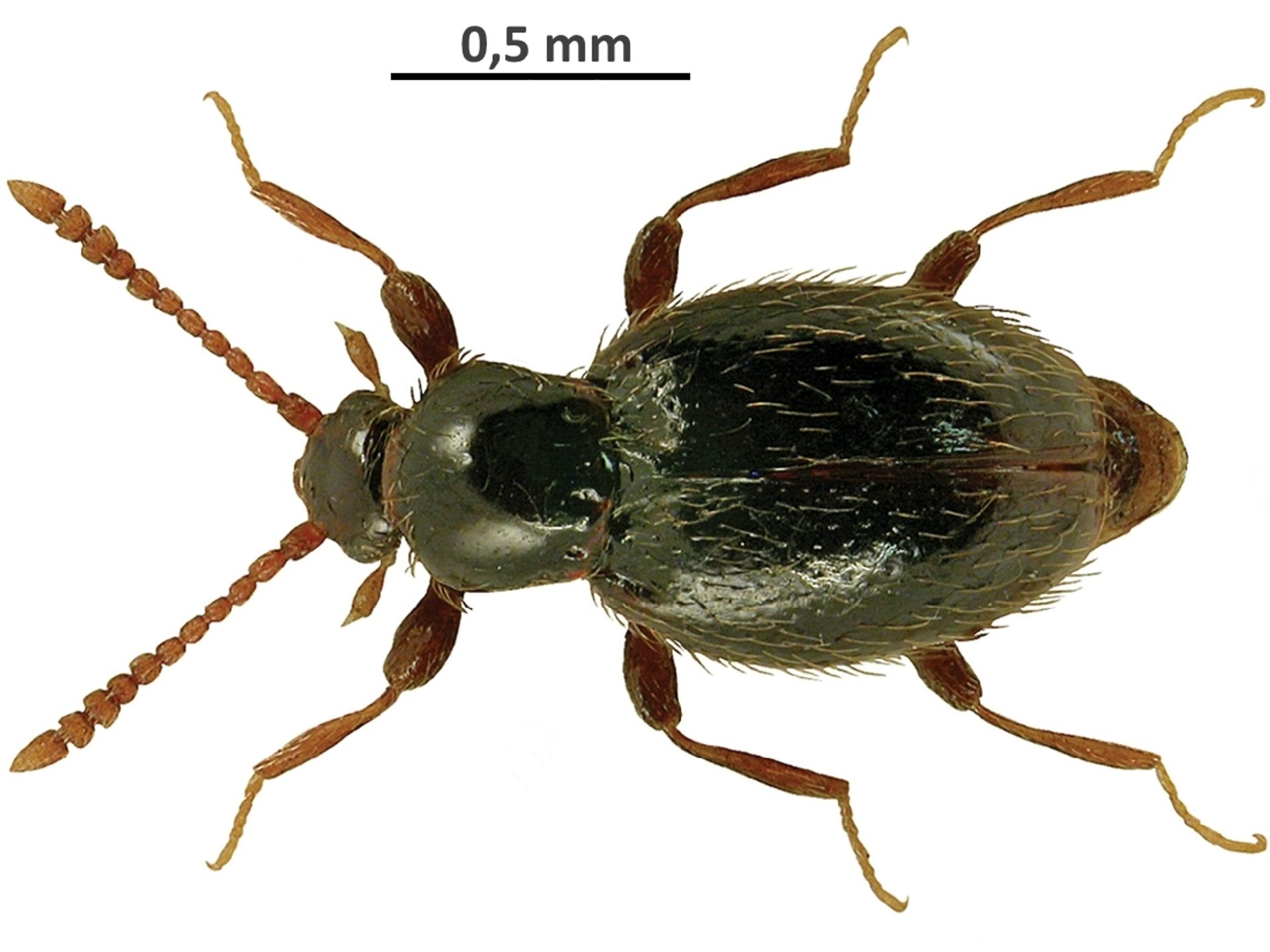
Diagnostic features include the presence of glandular pores on abdominal tergites (particularly tergites III–V), a compact body form with the pronotum narrower than the at their base, and the characteristic pselaphine antennal structure with a loose, 3-segmented club. Distinguished from related tribes (e.g., Pselaphini, Tmesisternini) by the specific arrangement and structure of abdominal glands, which appear as distinct circular or oval pores. Male genitalia often asymmetrical and -diagnostic. Examination typically requires high magnification (40–100×).
Images
Habitat
Primarily found in forest leaf litter, particularly in moist, shaded environments. Also occurs in moss, decaying wood, fungal fruiting bodies, and soil horizons rich in organic matter. Some associated with nests (myrmecophily) or colonies. specificity varies by ; many show preference for undisturbed, mature forest .
Distribution
distribution with highest diversity in tropical and subtropical regions. Well-represented in the Oriental, Neotropical, and Afrotropical realms. Present but less diverse in the Palearctic and Nearctic regions, where they extend into temperate forests. Some exhibit disjunct distributions suggesting ancient vicariance patterns.
Seasonality
Activity patterns poorly documented for most . likely present year-round in stable tropical . In temperate regions, probably most active during spring and summer when moisture and decomposition rates are favorable. No confirmed mass patterns or strong seasonal activity documented.
Life Cycle
Complete (, larva, pupa, ). Larvae poorly known and rarely collected; likely inhabit same microhabitats as adults. Developmental duration unknown for most . No evidence of parental care. Multiple per year probable in tropical species; single or overlapping generations likely in temperate species.
Behavior
Slow-moving, cryptic beetles that remain concealed in microhabitats. When disturbed, often feign death or retreat into crevices. Some produce defensive secretions from abdominal glands. -associated species may exhibit reduced locomotion and chemical integration with colonies. No confirmed aggregative or social beyond potential mating .
Ecological Role
Members contribute to decomposition processes in forest floor . As micro- or scavengers, they likely feed on fungal , spores, or minute in soil and litter, though specific dietary roles remain undocumented. Some participate in complex ecological networks through associations with ants or .
Human Relevance
No direct economic importance. Occasionally collected in ecological surveys and biodiversity assessments. Presence may serve as an indicator of intact forest floor and continuity due to sensitivity to disturbance and microhabitat specificity. No known pest status or beneficial applications in agriculture or biocontrol.
Similar Taxa
- PselaphiniShares compact body form and antennal structure; distinguished by lacking prominent abdominal glandular pores and by different pronotal-elytral junction .
- TmesisterniniSimilar size and ; separated by antennal club structure and absence of the characteristic glandular tergal pores of Glandulariini.
- BatrisiniOverlaps in size and distribution; Batrisini typically have more elongated bodies and different abdominal gland arrangements, often with modified tergite VIII in males.
More Details
Taxonomic History
Glandulariini was established based on the distinctive abdominal glandular structures, which represent a major synapomorphy for the tribe. The internal classification remains unstable, with generic limits and relationships under active revision. Molecular phylogenetic studies are beginning to clarify relationships within Pselaphinae, though sampling of Glandulariini remains limited.
Collection Methods
Best collected through extraction of leaf litter and moss, or by hand-sorting of decaying wood and fungal sporocarps. intercept traps occasionally capture dispersing individuals. Pitfall traps generally ineffective due to small size and non-surface-active habits. Specimens require preservation in 70–95% ethanol or mounting on card points for study.