
Stenichnus
Thomson, C. G., 1859
Species Guides
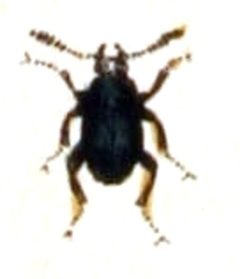
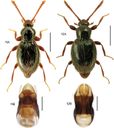
1Stenichnus is a of minute rove beetles in the Scydmaeninae, characterized by distinctive larval with complex chaetotaxy (setal patterns). The genus is distributed across the Palaearctic region with some Nearctic representatives. Larvae have been studied through shed skins and rearing to , revealing significant morphological variation between that complicates assessments.

Pronunciation
How to pronounce Stenichnus: //stɛˈnɪknəs//
These audio files are automatically generated. While they are not always 100% accurate, they are a good starting point.
Identification
are minute beetles in the -like stone Scydmaeninae. Larvae can be distinguished by their chaetotaxy, though specific identification requires comparison of setal patterns on the , thoracic tergites, and abdominal tergites; the epicranial and frontal arm placement appear to vary between .
Images
Distribution
Palaearctic region; records from Denmark, Norway, and Sweden. One (Stenichnus turbatus) occurs in the Nearctic region.
Life Cycle
Complete with , larva, pupa, and stages. Mature larvae are known from shed skins; development includes a larval stage that can be reared to adulthood under laboratory conditions.
Behavior
Larvae and exhibit feeding that has been observed in laboratory settings; adult longevity has been documented under laboratory conditions.
Similar Taxa
- ScydmaenusBoth belong to Scydmaeninae and share minute body size and -like appearance; Stenichnus is distinguished by tribal placement in Stenichnini and specific chaetotaxic patterns.
Misconceptions
The name 'Stenichnus' was previously used as an ichnogenus for fossil footprints in the Supai Formation; this is unrelated to the and represents a homonym.
Sources and further reading
- BugGuide
- Wikipedia
- GBIF taxonomy match
- iNaturalist taxon
- NCBI Taxonomy
- Catalogue of Life
- Mature larva of Stenichnus collaris (Müller & Kunze) (Coleoptera: Staphylinidae: Scydmaeninae)
- Mature larva of Stenichnus godarti (Latreille) (Coleoptera: Staphylinidae, Scydmaeninae): redescription, hypothesis of displaced epicranial suture and alternative interpretation of homology between chaetotaxic structures