
Scaphisomatini
Casey, 1893
Genus Guides
3- Baeocera
- Scaphisoma(shining fungus beetles)
- Toxidium
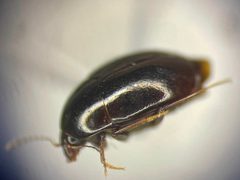
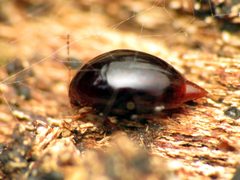
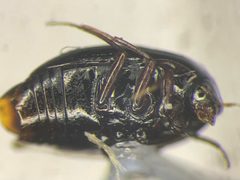
Scaphisomatini is a tribe of rove beetles ( Staphylinidae, Scaphidiinae) established by Casey in 1893. Members of this tribe are characterized by their association with fungal , particularly as inhabitants of sporocarps (fruiting bodies) of basidiomycete fungi. The tribe comprises numerous distributed across multiple biogeographic regions. These beetles represent a specialized lineage within the Scaphidiinae, having evolved to exploit microhabitats within decaying fungal material.
Pronunciation
How to pronounce Scaphisomatini: /skæfɪsoʊmətɪnaɪ/
These audio files are automatically generated. While they are not always 100% accurate, they are a good starting point.
Identification
Scaphisomatini can be distinguished from other Scaphidiinae tribes primarily by a combination of characters including the structure of the abdominal tergites and the form of the . Members generally possess the characteristic short typical of Staphylinidae, exposing most of the . Specific diagnostic features involve details of the antennal club, pronotal shape, and male genitalia structure; precise identification to tribe level requires examination of these morphological characters under magnification. Separation from the related tribe Scaphidiini often depends on subtle differences in tergal chaetotaxy and the configuration of the eighth abdominal tergite.
Images
Habitat
in this tribe are predominantly found in association with fungal sporocarps, particularly mushrooms and bracket fungi (Basidiomycota). They inhabit the interior spaces of decaying fruiting bodies, where moisture levels remain high and competition from other arthropods may be reduced. Some species have been recorded from polypore fungi on dead wood. The microhabitat specificity extends to particular stages of fungal decomposition, with different species potentially occupying fresh versus well-decayed sporocarps.
Distribution
The tribe has been recorded from multiple biogeographic regions including the Nearctic, Palearctic, Neotropical, Oriental, and Australian regions. Documentation is strongest for North American and European faunas, with substantial gaps remaining for tropical Asian and African components. Individual within the tribe often show restricted distributions, with some being to single regions or even particular mountain systems.
Seasonality
Activity patterns correlate strongly with fungal fruiting . In temperate regions, most observations occur during late summer and autumn when basidiomycete sporocarps are abundant. Some associated with wood-decaying polypores may be found across extended periods when fungi persist. Tropical species likely show less pronounced seasonal patterns corresponding to wet-dry cycles rather than temperature fluctuations.
Host Associations
- Basidiomycota - Sporocarps of mushrooms and bracket fungi serve as primary microhabitat
Behavior
and larvae are found within fungal sporocarps, where they move through the decaying tissue. When disturbed, individuals may remain motionless or attempt to conceal themselves within folds of fungal tissue. The of rapid withdrawal into tight spaces within the sporocarp structure has been observed. of multiple individuals within single fruiting bodies occur, though whether this represents social behavior or simply shared resource exploitation remains unclear.
Ecological Role
Members of this tribe function as decomposers within fungal microhabitats, contributing to the breakdown of sporocarp tissue. Their specialized association with basidiomycete fruiting bodies suggests they occupy a narrow in the decomposition web of forest . They may serve as prey for other arthropods within the same microhabitat, including predatory mites and other beetles.
Human Relevance
No direct economic importance has been documented. The tribe is of interest to mycophagous and students of rove beetle . Records from commercially cultivated mushrooms are rare; most appear restricted to wild fungal in natural or semi-natural .
Similar Taxa
- ScaphidiiniAlso within Scaphidiinae and sharing fungal associations; distinguished by differences in abdominal tergite structure and
- CypariiniAnother tribe of Scaphidiinae with similar body plan; separation requires examination of detailed morphological characters including antennal structure and male genitalia
More Details
Taxonomic stability
The tribal classification within Scaphidiinae has undergone revision, with Scaphisomatini generally recognized as a valid and distinct lineage based on both morphological and molecular data. Generic composition has been refined through recent phylogenetic studies.
Collection methods
Specimens are most effectively collected by careful dissection of fresh to moderately decayed fungal sporocarps, followed by extraction using or direct examination of sieved material. Passive collection methods such as pitfall trapping are largely ineffective for this group.