Oxyporus rufipennis
LeConte, 1863
Oxyporus rufipennis is a rove beetle in the Oxyporinae, characterized by relatively large size within the and distinctive reddish wing covers. The occurs across northeastern North America, with records spanning Canada and the eastern United States. Like other members of Oxyporus, it is associated with fungal , particularly polypore bracket fungi on decaying wood.
Pronunciation
How to pronounce Oxyporus rufipennis: /ˌɒksɪˈpɔːrəs ˌruːfɪˈpɛnɪs/
These audio files are automatically generated. While they are not always 100% accurate, they are a good starting point.
Identification
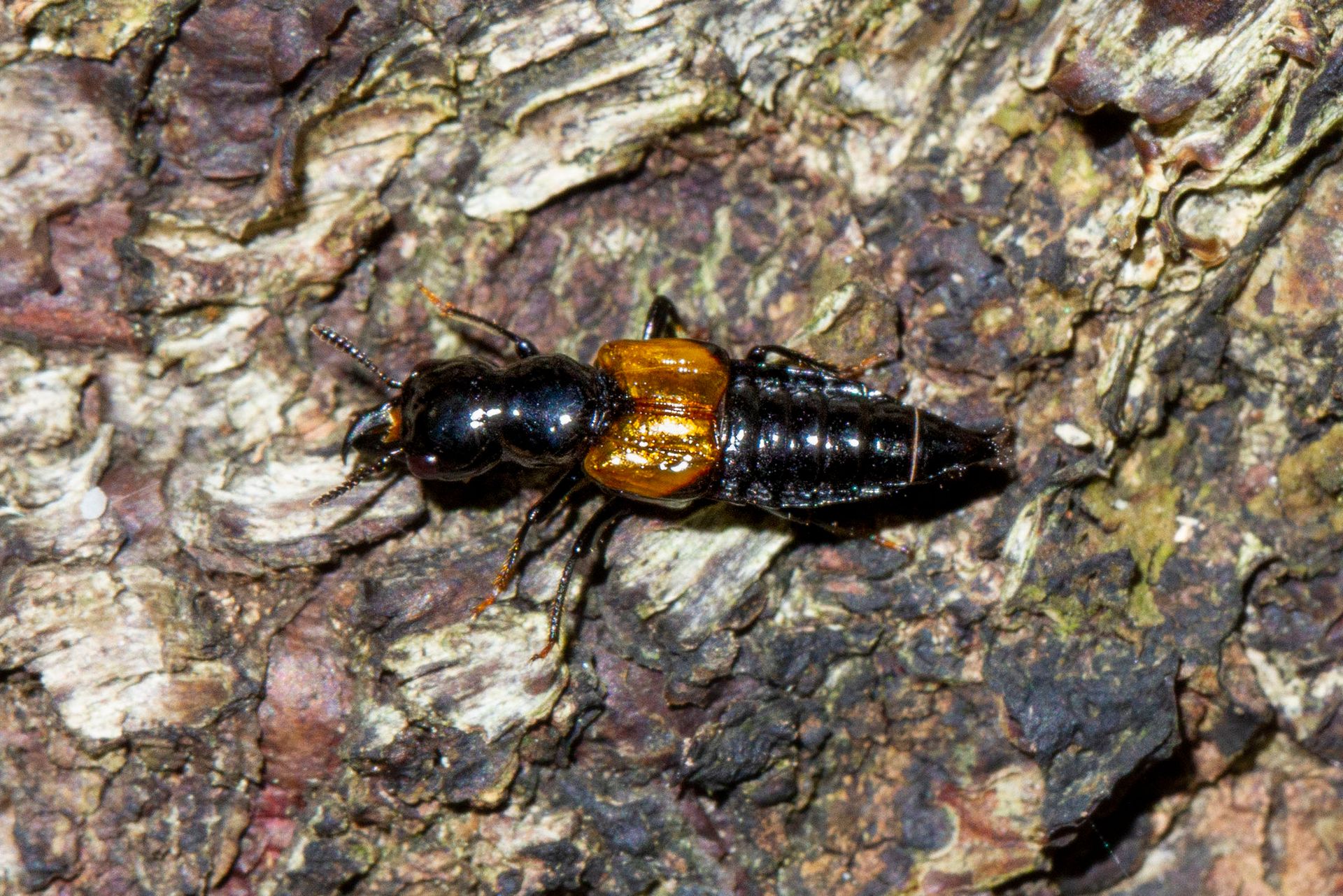
Distinguished from other Oxyporus by the (reddish) coloration of the —O. maxillosus has black elytra, and O. populinus has yellowish to testaceous elytra. The combination of large size (>8 mm), reddish elytra, and association with woody polypores separates it from most other staphylinids in its range. Antennal structure and require examination for definitive identification.
Images
Appearance
Medium-sized rove beetle with elongated body form typical of Staphylinidae. reddish-brown to , contrasting with darker and pronotum. long and thread-like. partially exposed beyond the short elytra. Body length approximately 8–12 mm, larger than most staphylinids.
Habitat
Deciduous and mixed forests, particularly areas with abundant dead or dying hardwoods. Found in association with fruiting bodies of polypore fungi (bracket fungi) on decaying logs and stumps. Moist woodland environments with substantial woody debris.
Distribution
Eastern North America: Canada (New Brunswick, Nova Scotia, Ontario, Quebec) and United States (Connecticut, District of Columbia, Iowa, Illinois, Indiana, Kansas, Massachusetts, Maryland, Maine, Michigan, Minnesota, Missouri, New Hampshire, New Jersey, North Carolina, New York, Pennsylvania, Rhode Island, Vermont).
Seasonality
active primarily from late spring through autumn; peak activity in summer months. Presence tied to fungal fruiting .
Diet
Mycophagous; feeds on polypore fungi.
Host Associations
- Polyporaceae - food sourceBracket fungi on decaying wood
Behavior
and larvae inhabit fruiting bodies of polypore fungi. Has been observed within the pore layers and on undersurfaces of bracket fungi. Relatively slow-moving compared to many staphylinids.
Ecological Role
Fungivore contributing to decomposition of woody substrates via consumption of fungal tissue. Part of the of organisms associated with polypore on dead wood.
Human Relevance
No direct economic significance. Occasionally encountered by mushroom collectors and entomologists surveying fungal . Indirectly indicates presence of mature forest with decaying wood and established fungal .
Similar Taxa
- Oxyporus maxillosusSimilar size and ; distinguished by black versus in O. rufipennis
- Oxyporus populinusOverlapping range and ; has yellowish to pale testaceous rather than
- Other large StaphylinidaeMost lack the specific combination of large size, , and obligate polypore association
More Details
Taxonomic note
The specific epithet rufipennis refers directly to the reddish wing covers, a diagnostic character noted by LeConte in the original 1863 description.
Collection method
Best collected by examining fresh polypore fruiting bodies, particularly Ganoderma, Fomes, and related on hardwood logs; specimens may be found within the pore surface or under the bracket.