
Oxyporus
Species Guides
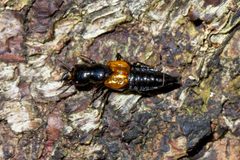
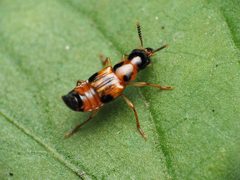
12Oxyporus is a of mycophagous rove beetles in the Staphylinidae, Oxyporinae. The genus contains over 100 distributed across Eurasia and the Americas. and larvae are highly specialized fungivores that live inside and feed on fleshy fruit bodies of agaricoid Basidiomycetes. They exhibit notably short duration matching the ephemeral nature of their fungal .

Pronunciation
How to pronounce Oxyporus: //ˌɒksiˈpɔːrəs//
These audio files are automatically generated. While they are not always 100% accurate, they are a good starting point.
Identification
Oxyporus can be distinguished from other rove beetles by their highly specialized mycophagous lifestyle and association with fleshy mushroom fruit bodies. possess modified adapted for chewing fungal tissue. The subgenera Oxyporus s. str. and Pseudoxyporus differ in adult , larval chaetotaxy, and cox1 barcoding sequences. Larvae of Oxyporus s. str. and Pseudoxyporus show significant morphological differences that may support elevation to rank.
Images
Habitat
Strictly associated with fleshy fruit bodies of agaricoid Basidiomycetes with round caps. and larvae inhabit the interior of these fungal fruit bodies, creating chambers within the tissue. In laboratory rearing, successful development occurs in containers with sand and soil substrate including leaf or coniferous litter layers maintained at 22–25°C.
Distribution
Eurasia, North America, and South America. Documented include the Russian Far East (Primorsky Region), with specific collections from the Arboretum and Gornotaezhnaya Station surroundings.
Diet
Exclusive mycophagy: and larvae feed on fleshy fruit bodies of agaricoid Basidiomycetes. Adults use modified to chew fungal tissue. Larvae feed gregariously within fungal chambers.
Host Associations
- agaricoid Basidiomycetes - food source and fleshy fruit bodies with round caps; specific identifications determined by Lyudmila Kalinina
Life Cycle
duration is notably short, matching the ephemeral nature of fungal fruit bodies. Third instar larvae dig into sand substrate to pupate when the fungal is nearly consumed. Documented rearing: O. maxillosus from to ; O. procerus from second to third instar; O. (P.) melanocephalus from egg to .
Behavior
and larvae live inside fungal fruit bodies. Larvae feed gregariously within fungal chambers. Female care has been observed. are laid within fungal fruit bodies; in O. melanocephalus, eggs are deposited between gill structures. Typically a single female with egg cluster or first instar larvae occupies each fungal chamber.
Ecological Role
Specialized fungivore (mycophage) that consumes fruit bodies of agaricoid Basidiomycetes. Represents a highly derived consumer within the rove beetle radiation.
Similar Taxa
- other StaphylinidaeOxyporus is distinguished by obligate mycophagy on agaricoid Basidiomycetes and modified for chewing fungal tissue; most other rove beetles have broader diets and lack this specialized fungal association
- Pseudoxyporus (subgenus)Currently treated as subgenus but shows significant differences in larval , , and cox1 barcoding region that may warrant -level separation
More Details
Taxonomic note
The Oxyporus was established for beetles in 1800; the same name is also used for a genus of polypore fungi ( Schizoporaceae/Oxyporaceae). These are unrelated organisms sharing only a genus name.
Subgeneric classification
Oxyporus contains two subgenera: Oxyporus s. str. and Pseudoxyporus. Morphological, behavioral, and molecular differences between them are substantial and suggest potential elevation to rank.