Phosphuga atrata
(Linnaeus, 1758)
Black snail beetle
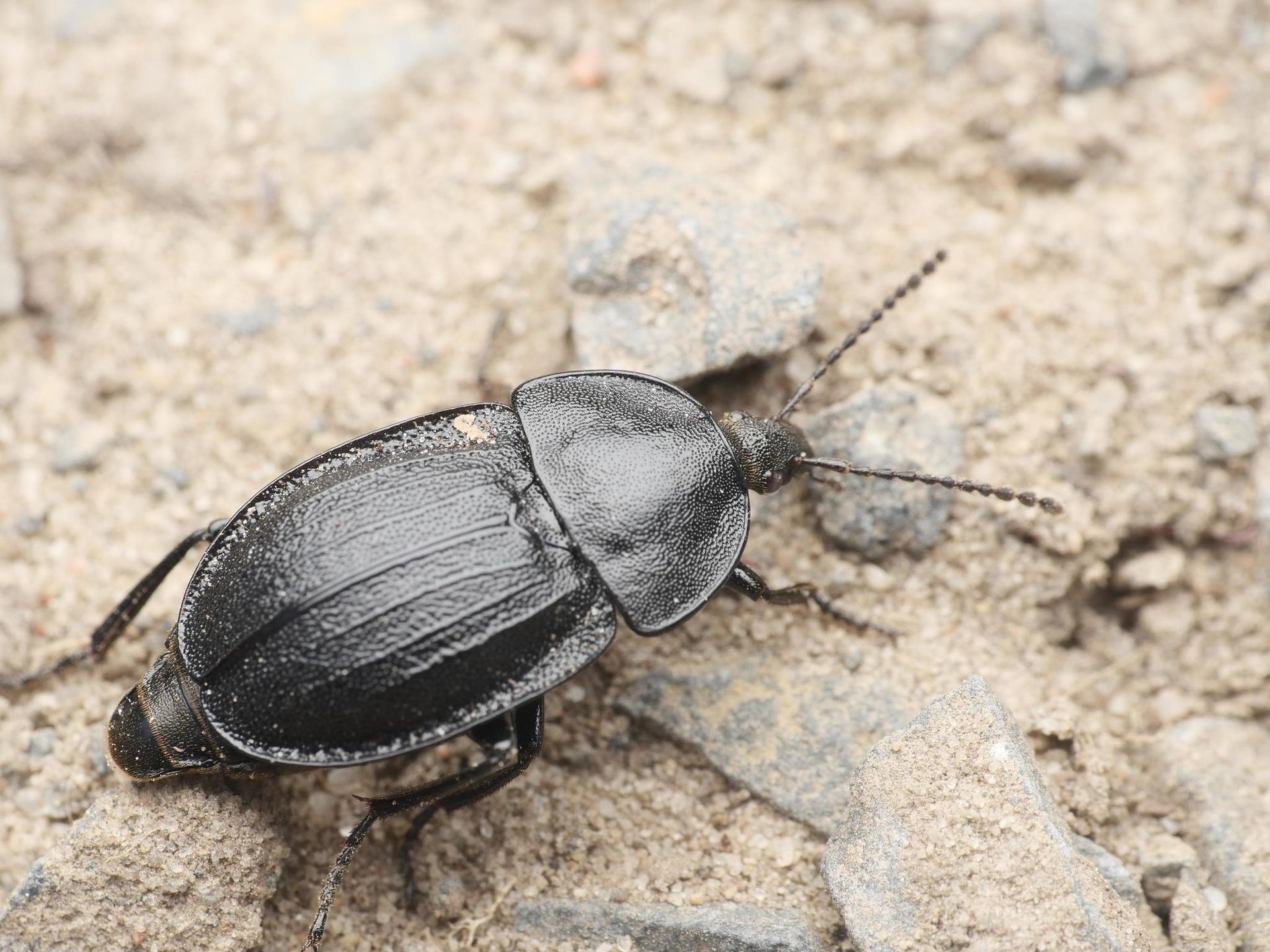
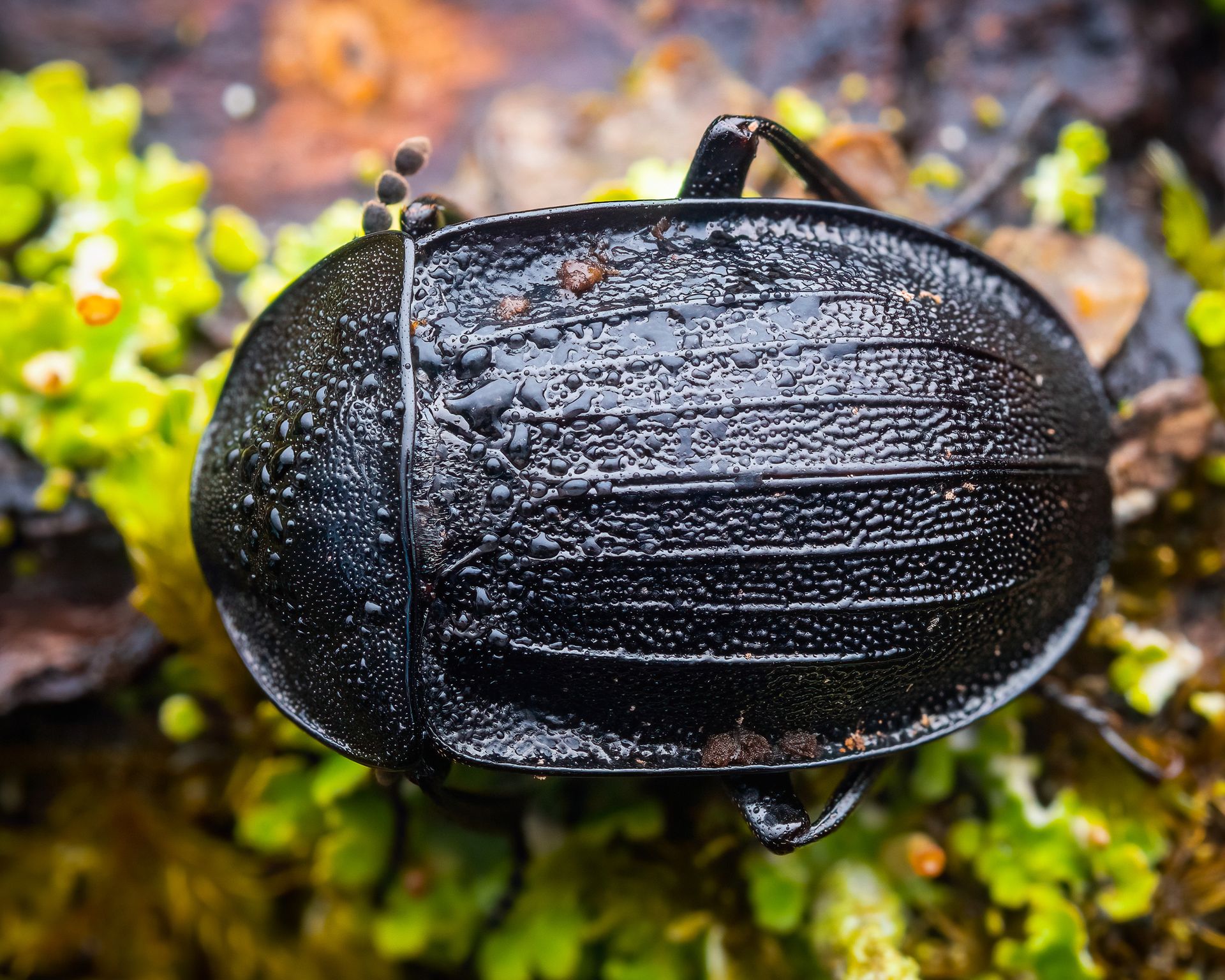
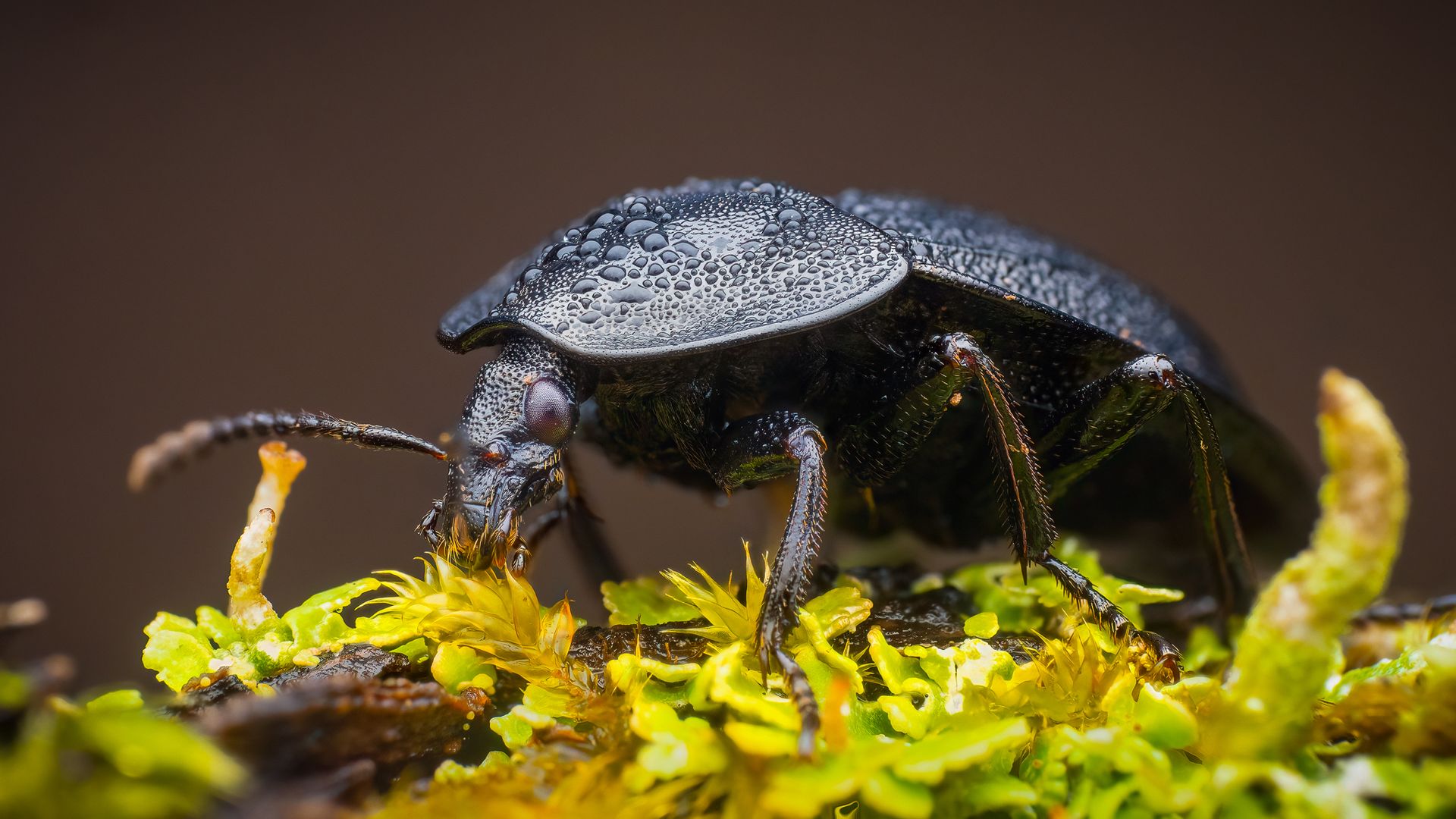
Phosphuga atrata is a European carrion beetle in the Silphidae, commonly known as the black snail beetle. are notable of live snails, using an elongated neck to reach into shells and spray digestive fluid to subdue prey. The also feeds on insects, earthworms, and carrion. Larvae are similarly predatory on snails and pupate in soil. Coloration changes with age: young beetles are brownish, while mature adults become black.
Pronunciation
How to pronounce Phosphuga atrata: /fɔsˈfjuːɡə əˈtrɑːtə/
These audio files are automatically generated. While they are not always 100% accurate, they are a good starting point.
Identification
Distinguished from other Silphidae by the combination of elongated, narrow pronotum (neck) and small relative to body size. The neck structure is specialized for accessing snail shells, unlike the broader, more rounded pronotum of most carrion beetles. Black coloration in mature specimens and predatory on snails further separate it from typical carrion-feeding relatives.
Images
Appearance
up to 15 mm in length with elongated, narrow neck (pronotum) adapted for reaching into snail shells. Body slender and somewhat flattened. Young beetles brownish in color; older individuals uniformly black. relatively small, with distinct club. typically covering . Legs moderately long, adapted for ground movement.
Habitat
Found in varied terrestrial including woodlands, meadows, and areas with sufficient moisture to support snail . Presence linked to availability of prey snails and suitable soil for larval .
Distribution
Native to Europe; introduced to Iceland. Recorded across Russia (European part, Siberia, Far East, Kuril Islands), Turkey, Armenia, Azerbaijan, Georgia, Iran, Afghanistan, Central Asian states (Kyrgyzstan, Kazakhstan, Tajikistan, Turkmenistan, Uzbekistan), Mongolia, Korea (North and South), Japan, India (Kashmir), and China (Heilongjiang).
Diet
feed on live snails (primary prey), insects, earthworms, and carrion. Larvae feed exclusively on snails. Prey capture involves spraying digestive fluid into snail shells via the elongated neck.
Life Cycle
Larvae black and flattened, feeding on snails. occurs in ground. Developmental stages: , larva, pupa, . Specific duration of stages not documented.
Behavior
employ active on snails using specialized neck to reach into shells and apply digestive fluid. Has been observed feeding on carrion, though live prey appears preferred.
Ecological Role
of gastropods, potentially regulating snail . Also contributes to carrion decomposition when feeding on dead matter. Larval stage functions as specialized snail predator in soil .
Human Relevance
Of minor direct significance; not a pest . May incidentally occur in gardens or agricultural settings where snails are present. Subject of entomological interest due to specialized feeding .
Similar Taxa
- Other Silphidae (carrion beetles)Most carrion beetles lack the elongated, narrow neck of Phosphuga; they typically have broader, more rounded pronota and feed primarily on carrion rather than live snails.
- Oiceoptoma spp.Similar size and coloration, but with broader, less elongated pronotum and different feeding habits focused on carrion.