
Oxelytrum discicolle
(Brullé, 1836)
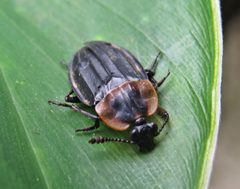
Oxelytrum discicolle is a carrion beetle distributed throughout the Neotropical region from Mexico to Argentina. It is one of the most commonly collected silphid beetles in studies in South America. The exhibits strictly activity patterns and shows strong preference for carcasses in advanced stages of decomposition. are attracted to decomposing vertebrate remains where they feed and likely reproduce.
Pronunciation
How to pronounce Oxelytrum discicolle: /ˌɒksɪˈlaɪtrəm dɪˈsɪkɒli/
These audio files are automatically generated. While they are not always 100% accurate, they are a good starting point.
Identification
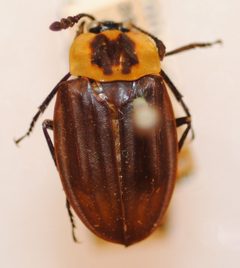
Members of the Oxelytrum can be distinguished from other Neotropical silphids by their relatively large size, elongate body form, and the characteristic structure of the . Specific characters for O. discicolle include the discal coloration pattern of the elytra (as suggested by the epithet "discicolle"). Accurate identification to species level requires examination of genitalic characters and comparison with type material, particularly given the morphological similarity among Oxelytrum species.
Images
Habitat
Open and forested in tropical and subtropical regions. Associated with decomposing vertebrate carcasses in terrestrial environments. In Brazil, has been collected in peri-urban forest settings.
Distribution
Mexico, Guatemala, Belize, El Salvador, Nicaragua, Rica, Panama, Colombia, Venezuela, Ecuador, Peru, Bolivia, Brazil, Paraguay, Uruguay, and Argentina. Records from Texas, USA are considered doubtful. The has been documented from specific localities including Socorro, San Gil, and Suaita in Colombia.
Seasonality
activity peaks during the rainy season in tropical regions. In Brazil, significantly higher abundance has been recorded during wet periods compared to dry seasons.
Diet
Carrion. feed on decomposing vertebrate tissue.
Life Cycle
Development occurs on carrion substrates. Specific details of larval development and are not documented in available sources.
Behavior
Strictly . are 17 times more abundant in night collections than day collections. Shows marked preference for carcasses in advanced stages of decomposition over fresh remains. Adults are attracted simultaneously to multiple decomposition stages when presented together.
Ecological Role
Carrion decomposer. Forensically important for estimating postmortem interval in the Neotropical region. Contributes to nutrient cycling through carcass decomposition.
Human Relevance
Significant forensic importance in South and Central America. Used as an in to estimate time since death based on patterns and developmental stage. Presence and abundance on cadavers can provide information about decomposition timeline and environmental conditions.
Similar Taxa
- Other Oxelytrum speciesMorphologically similar occur in the same geographic range. Accurate identification requires examination of male genitalia and detailed comparison of elytral coloration patterns.
- Other SilphidaeShares carrion association and general body plan with other carrion beetles. Distinguishable by combination of size, body shape, and Neotropical distribution.
More Details
Forensic significance
O. discicolle is among the most frequently cited silphid in literature for the Neotropical region. Its predictable and preference for advanced decomposition stages must be considered when interpreting forensic evidence.
Taxonomic note
placement has been inconsistent across databases. While NCBI and traditional treatments place this in Silphidae, some sources including GBIF and iNaturalist have listed it under Staphylinidae. This reflects ongoing taxonomic discussion regarding the classification of carrion beetles.
Sources and further reading
- BugGuide
- Wikipedia
- GBIF taxonomy match
- iNaturalist taxon
- NCBI Taxonomy
- Catalogue of Life
- New Record and Update on the Distribution ofOxelytrum discicolle(Brullé, 1840) (Coleoptera: Silphidae) in South America
- Diel Activity and Effect of Carcass Decomposition on the Attractiveness to the Forensically Important SpeciesOxelytrum Discicolle(Coleoptera: Silphidae)†