
Oxelytrum
Gistel, 1848
carrion beetles
Species Guides
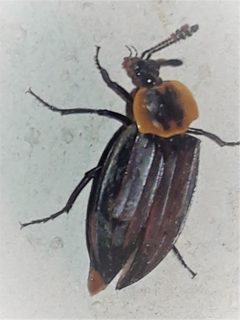
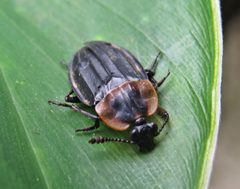
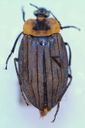
1Oxelytrum is a of carrion beetles in the Silphidae, containing approximately 10 described distributed primarily in South America. Members are characterized by three distinct ridges on each , a hairless pronotal disk, and 3-segmented antennal clubs. Most species are and associated with decomposing animal remains. The genus has forensic significance due to predictable patterns on carcasses.
Pronunciation
How to pronounce Oxelytrum: //ˌɒksɪˈlaɪtrəm//
These audio files are automatically generated. While they are not always 100% accurate, they are a good starting point.
Identification
Distinguished from other Silphidae by the combination of three elytral ridges per , glabrous pronotal disk, and 3-segmented antennal clubs. The ridged elytra separate it from the related Nicrophorus, which has smooth or differently sculptured elytra.
Images
Appearance
Medium to large carrion beetles, usually black with reddish markings. Each bears three longitudinal ridges. The pronotal disk lacks hairs. terminate in 3-segmented clubs.
Habitat
Associated with carrion and decomposing animal remains in forested environments. Documented from terra firme forests in Amazonia and peri-urban forest settings.
Distribution
Primarily South America, with records from Brazil, French Guiana, and other Neotropical regions. Specific locality records include Manaus, Amazonas, Brazil.
Seasonality
Activity influenced by rainfall; Oxelytrum discicolle shows significantly higher abundance during the rainy season.
Diet
Necrophagous; and larvae feed on decomposing animal remains. Adults of O. cayennense have been observed preying on dipteran larvae.
Host Associations
- Sus scrofa - carrion resourcecolonizes pig carcasses from bloated to skeletonized stages
- Diptera larvae - prey prey on fly larvae at carcass sites
Life Cycle
Development tied to carcass decomposition stages. colonize remains early (from day 2 postmortem in O. cayennense); larvae appear later (from day 5 postmortem) and feed on skeletonized areas.
Behavior
activity pattern; of O. discicolle are trapped 17 times more frequently at night than during day. Shows preference for carcasses at advanced decomposition stages.
Ecological Role
Carrion decomposer facilitating nutrient cycling; of dipteran larvae at carcass sites; forensic for estimating postmortem interval.
Human Relevance
Forensic importance: both and larval stages serve as postmortem interval indicators due to predictable timing on remains. Adult on fly larvae can complicate forensic analyses that rely on dipteran developmental stages.
Similar Taxa
- NicrophorusBoth are carrion-associated Silphidae, but Nicrophorus lacks the three elytral ridges and has differently structured ; Nicrophorus also typically show parental care not documented in Oxelytrum.
More Details
Forensic application
Both life stages of O. cayennense have demonstrated potential as postmortem interval indicators: colonize from day 2 postmortem, larvae from day 5 postmortem.
Taxonomic note
Some sources erroneously place this in Staphylinidae; it is correctly classified in Silphidae.
Sources and further reading
- BugGuide
- Wikipedia
- GBIF taxonomy match
- iNaturalist taxon
- NCBI Taxonomy
- Catalogue of Life
- New Record and Update on the Distribution ofOxelytrum discicolle(Brullé, 1840) (Coleoptera: Silphidae) in South America
- Diel Activity and Effect of Carcass Decomposition on the Attractiveness to the Forensically Important SpeciesOxelytrum Discicolle(Coleoptera: Silphidae)†
- Association of Oxelytrum cayennense (Silphidae, Coleoptera) with Pig Carcasses (Sus scrofa, Suidae) in Terra Firme Areas in Manaus, Amazonas, Brazil