
Necrophilus
Latreille, 1829
Species Guides
2- Necrophilus hydrophiloides(flat brown scavenger beetle)
- Necrophilus pettitii(small scavenger beetle)
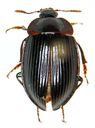
Necrophilus is a of primitive carrion beetles in the Agyrtidae, established by Latreille in 1829. The genus contains at least three described distributed across the Northern Hemisphere. These beetles are associated with decaying organic matter and represent one of the more basal lineages within the staphylinoid beetles. They are often referred to as flat brown scavenger beetles or small scavenger beetles in common usage.


Pronunciation
How to pronounce Necrophilus: //nɛˈkrɒfɪləs//
These audio files are automatically generated. While they are not always 100% accurate, they are a good starting point.
Identification
Members of Necrophilus can be distinguished from other Agyrtidae by their flattened body form and association with carrion. They differ from the related Agyrtes in morphological details of the and pronotum. The genus is characterized by a relatively broad, flattened body compared to many other staphylinoid beetles. -level identification requires examination of male genitalia and subtle differences in body proportions.
Images
Habitat
in this are found in associated with decaying organic matter, including carrion, decaying fungi, and forest floor detritus. Necrophilus subterraneus has been documented from subterranean environments including caves. They occupy moist, shaded microhabitats in forested areas where decomposition processes are active.
Distribution
The has a Holarctic distribution. Necrophilus hydrophiloides occurs in Europe and Asia. Necrophilus pettiti is found in western North America. Necrophilus subterraneus has been recorded from Europe.
Diet
Feeding habits are centered on decaying organic matter, particularly carrion. The specific dietary preferences of individual remain poorly documented.
Behavior
have been observed aggregating at carrion and other decaying matter. Their is presumed to include both feeding and breeding at these resource patches, though detailed behavioral studies are limited.
Ecological Role
These beetles function as scavengers in decomposition , contributing to nutrient cycling through consumption of decaying animal matter. They likely serve as prey for larger and small vertebrates in forest .
Human Relevance
Necrophilus have potential forensic significance due to their association with carrion, though they are less studied than silphid carrion beetles in this context. They have no known economic impact as pests or beneficial species.
Similar Taxa
- AgyrtesAlso in Agyrtidae but differs in body shape, with Agyrtes being more cylindrical and less flattened than Necrophilus.
- SilphidaeTrue carrion beetles in Silphidae are more derived, generally larger, and have different antennal club structure.
More Details
Taxonomic history
Necrophilus has been variously classified within Staphylinidae or as a separate -level lineage. Current classification places it in Agyrtidae based on molecular and morphological evidence, representing a primitive lineage within Staphylinoidea.
Conservation status
Necrophilus subterraneus has been noted in cave and may warrant conservation attention in regions where subterranean are threatened.