
Omorgus texanus
LeConte, 1854
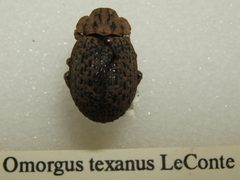
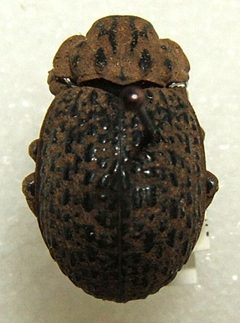
Omorgus texanus is a skin beetle in the Trogidae, first described by LeConte in 1854. The is known from Texas in the United States and extends south into northeastern Mexico (Nuevo León, Tamaulipas). Like other members of the , it is associated with dry, sandy and has been observed feeding on dried animal matter. The species is part of a diverse genus of hide beetles that play important roles in decomposition and nutrient cycling in arid environments.

Pronunciation
How to pronounce Omorgus texanus: /oʊˈmɔrɡəs tɛkˈsænəs/
These audio files are automatically generated. While they are not always 100% accurate, they are a good starting point.
Images
Habitat
Sandy dune environments and arid rangeland. Observations from Mescalero Sand Dunes in southeastern New Mexico and similar in west Texas indicate preference for blowouts and areas with classic sand flora. Active in open, dry landscapes with sparse vegetation including mesquite (Prosopis glandulosa), yucca, and various desert composites.
Distribution
Nearctic region: primarily Texas, USA. Neotropical region: northeastern Mexico (Nuevo León, Tamaulipas). Distribution centered on the Chihuahuan Desert and associated sand dune systems of the southern Great Plains.
Seasonality
active from late spring through summer. Observations from June indicate peak activity during this period, with noted.
Diet
Has been observed feeding on dried animal . Like other Trogidae, likely feeds on dried animal remains and keratinous materials.
Behavior
Nocturnally active. have been found on sand at night and feeding on dried dog . Quick to take when disturbed.
Ecological Role
Decomposer and nutrient cycler in arid . Contributes to breakdown of animal-derived organic matter in sandy desert environments.
Similar Taxa
- Omorgus nodosusOccurs sympatrically in same sand dune (e.g., Mescalero Sand Dunes); distinguished by tuberculate pronotum and different elytral sculpturing
- Other Omorgus species-level separation from other Trogidae based on characteristic body form and preferences, though specific identification requires examination of pronotal and elytral patterns
More Details
Taxonomic history
Originally described by John Lawrence LeConte in 1854, a prominent 19th century American entomologist who described numerous North American .
Collection notes
The appears to be moderately common in suitable but undercollected due to its habits and association with ephemeral resources like dried . Standard daytime beating and sweeping techniques are unlikely to encounter this species; nighttime searching of sandy areas with headlamps is more effective.
Sources and further reading
- BugGuide
- Wikipedia
- GBIF taxonomy match
- iNaturalist taxon
- Bembicid Holdings | Entomology Research Museum
- California Has No State Bee--Yet! | Bug Squad
- 2018 New Mexico/Texas Insect Collecting Trip “iReport” | Beetles In The Bush
- Tracking Tetraopes texanus with Terry | Beetles In The Bush
- The Texas Prick | Beetles In The Bush