
Phanaeus texensis
Edmonds, 1994
Texas Black Phanaeus
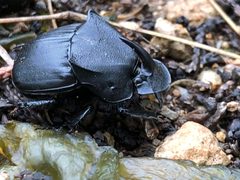
Phanaeus texensis is a dung beetle in the Scarabaeidae, first described by Edmonds in 1994. The species belongs to a renowned for its colorful, horned males and ecological role in burial. It is found in Texas and adjacent regions of Mexico.

Pronunciation
How to pronounce Phanaeus texensis: /fəˈniːəs tɛkˈsɛn.sɪs/
These audio files are automatically generated. While they are not always 100% accurate, they are a good starting point.
Identification
As a member of the Phanaeus, this likely exhibits with males bearing cephalic horns and females hornless or with reduced horns. Identification to species level requires examination of specific horn , pronotal and elytral sculpturing, and coloration patterns. The specific epithet "texensis" indicates a geographic association with Texas, which may aid in distinguishing it from congeneric species with overlapping ranges.
Images
Distribution
Nearctic region: USA (Texas); Neotropical region: Mexico (Coahuila).
Ecological Role
As a member of the true dung beetles ( Scarabaeinae), this likely contributes to nutrient cycling and soil aeration through burial activities, though specific ecological studies for this species are not documented in the provided sources.
Similar Taxa
- Phanaeus vindexBoth are North American Phanaeus with similar dung beetle ; P. vindex (rainbow dung beetle) is more widely distributed and well-documented, known for its metallic coloration and prominent male horn
- Phanaeus difformisAnother North American with overlapping geographic range; -level identification requires detailed morphological comparison of horn structure and body sculpturing
More Details
Taxonomic note
This was described relatively recently (1994) compared to many , suggesting it may have been previously confused with similar species or represents a cryptic species revealed through detailed taxonomic study.
Sources and further reading
- BugGuide
- GBIF taxonomy match
- iNaturalist taxon
- Catalogue of Life
- From the Bug of the Week mailbag a rainbow arrives to preserve our air from “The Infection of Dungs”: Rainbow dung beetle, Phanaeus vindex — Bug of the Week
- Preserve our air from “The Infection of Dungs”: Rainbow dung beetle, Phanaeus vindex — Bug of the Week
- Preserve our air from “The Infection of Dungs”: Rainbow dung beetle, Phanaeus vindex — Bug of the Week
- I’m a fun guy! | Beetles In The Bush
- You know what bugs me about dung beetles?… | Beetles In The Bush
- BitB Top 10 of 2010 | Beetles In The Bush