
Phanaeus difformis
LeConte, 1847
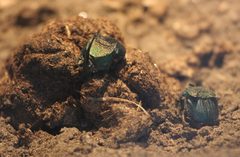
Phanaeus difformis is a dung beetle in the Scarabaeidae native to the south-central United States and adjacent far northern Mexico. It belongs to a known for colorful, horned males that specialize in burying mammal for larval development. The may hybridize with the more common P. vindex where their ranges overlap. Like other Phanaeus species, it provides services through dung burial and nutrient recycling.
Pronunciation
How to pronounce Phanaeus difformis: /fæˈniːəs dɪˈfɔːrmɪs/
These audio files are automatically generated. While they are not always 100% accurate, they are a good starting point.
Identification
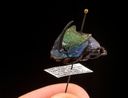
Phanaeus difformis can be distinguished from the similar and more common P. vindex by subtle morphological differences; where ranges overlap, hybridization may complicate identification. Males of the typically bear a prominent horn on the and pronotum, though specific horn for P. difformis is not well documented in available sources. The shares the metallic coloration typical of many Phanaeus species.
Images
Habitat
Inhabits regions where large mammal is available as a resource. Found in open and semi-open landscapes including prairies, pastures, and rural areas with grazing mammals.
Distribution
Native to the south-central United States (Arkansas, Colorado, Kansas, Louisiana, Oklahoma, Texas) and adjacent far northern Mexico (Tamaulipas).
Diet
feed on ; larvae develop within buried dung provisions.
Life Cycle
excavate burrows near fresh deposits and transport portions underground. are laid on the buried dung, and larvae complete development feeding on this material before pupating and emerging as adults.
Behavior
Exhibits typical tunneling dung beetle : cooperative excavation of burrows by male-female pairs, with males using horns to manipulate and defend tunnels. Dung is buried in subterranean chambers for offspring provisioning.
Ecological Role
Functions as a recycler, burying mammal waste and accelerating decomposition. This reduces fly breeding sites, parasitic worm , and surface nutrient loss while improving soil aeration and .
Human Relevance
Provides the same beneficial services as other dung beetles: of livestock areas, reduction of pest fly , and soil improvement. No specific documented economic uses or cultural significance for this .
Similar Taxa
- Phanaeus vindexOverlapping range and documented hybridization; P. vindex is generally more common and widespread, making careful morphological examination necessary where both occur.
More Details
Hybridization
Documented hybridization with P. vindex may produce intermediate forms, complicating identification in zones of sympatry.
Sources and further reading
- BugGuide
- Wikipedia
- GBIF taxonomy match
- iNaturalist taxon
- Catalogue of Life
- From the Bug of the Week mailbag a rainbow arrives to preserve our air from “The Infection of Dungs”: Rainbow dung beetle, Phanaeus vindex — Bug of the Week
- Preserve our air from “The Infection of Dungs”: Rainbow dung beetle, Phanaeus vindex — Bug of the Week
- Preserve our air from “The Infection of Dungs”: Rainbow dung beetle, Phanaeus vindex — Bug of the Week
- Bug Eric: June 2011
- Bug Eric: October 2022
- I’m a fun guy! | Beetles In The Bush