
Strigoderma pimalis
Casey, 1885
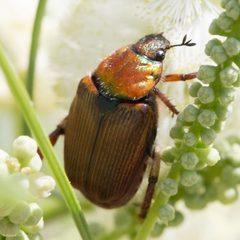
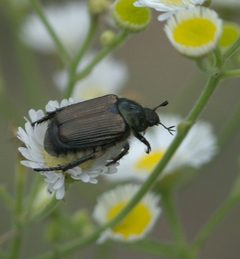
Strigoderma pimalis is a shining leaf chafer in the Scarabaeidae, first described by Casey in 1885. It belongs to a of small, often metallic scarabs commonly associated with flowers and low vegetation. The occurs in the southwestern United States and northern Mexico.
Pronunciation
How to pronounce Strigoderma pimalis: /strɪˈɡoʊdərmə paɪˈmeɪlɪs/
These audio files are automatically generated. While they are not always 100% accurate, they are a good starting point.
Identification
Strigoderma pimalis can be distinguished from by examination of pronotal and elytral characters. Within the , separation often relies on subtle differences in surface , coloration, and body proportions. Comparison with the closely related S. pygmaea and S. knausi requires attention to pronotal and elytral striation patterns.
Images
Habitat
Associated with arid and semi-arid environments including desert grasslands and scrublands. Has been observed on flowers of herbaceous plants including Coreopsis .
Distribution
Documented from Arizona and New Mexico in the United States, and from the Mexican states of Chihuahua and Sonora.
Similar Taxa
- Strigoderma pygmaeaSimilar small size and general habitus; distinguished by absence of pronotal present in S. pimalis
- Strigoderma knausiSimilar preference for sandy areas and low vegetation; distinguished by pronotal and geographic distribution
More Details
Taxonomic Note
The Strigoderma has undergone taxonomic revision, with Strigodermella previously treated as a separate genus now synonymized under Strigoderma. The specific epithet 'pimalis' refers to the Pima people or region of southern Arizona.
Collection Method
Based on patterns observed in , S. pimalis is likely collected by sweeping vegetation and possibly attracted to light traps, though direct observation records are sparse.