
Serica anthracina
LeConte, 1856
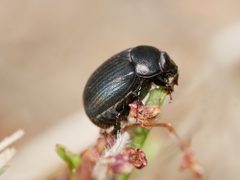
Serica anthracina is a small scarab beetle in the Scarabaeidae, described by LeConte in 1856. measure 5–8.5 mm in length and exhibit variable coloration ranging from uniform testaceous to black. The is distributed across western North America, from the Canadian prairies through the Rocky Mountain region to the Pacific coast.
Pronunciation
How to pronounce Serica anthracina: //sɛˈriː.kə ænˈθræ.sɪ.nə//
These audio files are automatically generated. While they are not always 100% accurate, they are a good starting point.
Identification
Identification to level within the Serica requires examination of male genitalia and other subtle morphological characters. The variable coloration (testaceous to black) overlaps with other Serica species. Specimens from the western Nearctic region with this size range and color pattern should be compared against described species in the S. anthracina species group. Dissection and reference to original description or revisionary works is typically necessary for confident identification.
Images
Appearance
are small scarab beetles, 5–8.5 mm in length. Body coloration is variable, ranging from uniform pale brown (testaceous) to entirely black. The lacks distinctive markings or patterns that would readily distinguish it from based on coloration alone.
Distribution
Western Nearctic region. Canada: Alberta, British Columbia, Saskatchewan. United States: California, Colorado, Montana, Nebraska, New Mexico, Oregon, South Dakota. The occupies a broad longitudinal range from the Great Plains to the Pacific coast, primarily in montane and intermontane regions.
Similar Taxa
- Other Serica speciesNumerous in western North America share similar size, body form, and variable brown to black coloration. Many require genitalic dissection for reliable separation.
- Serica sericeaOverlapping distribution and similar size; distinguished by subtle differences in antennal club structure and male genitalia.
More Details
Taxonomic History
Described by John Lawrence LeConte in 1856. The epithet 'anthracina' (meaning coal-black) refers to the dark color form, though the species is notably variable in coloration.
Collection Records
GBIF and iNaturalist records document 37+ observations, with specimens from both lowland and montane localities across its range. The appears to be moderately common but undercollected relative to more conspicuous scarabs.
Sources and further reading
- BugGuide
- Wikipedia
- GBIF taxonomy match
- iNaturalist taxon
- Meloidae Holdings | Entomology Research Museum
- Bohart Museum Features UC Davis Forensic Entomologist Bob Kimsey | Bug Squad
- Bug Eric: Bridge Orbweaver (Gray Cross Spider)
- How Blow Flies Compete (or Not) for Decomposition Duties
- Bee Fly Parasitism of Tetracha virginica | Beetles In The Bush
- They eat dead things, Part II - Blow flies, Calliphoridae — Bug of the Week