
Amblonoxia harfordi
(Casey, 1889)
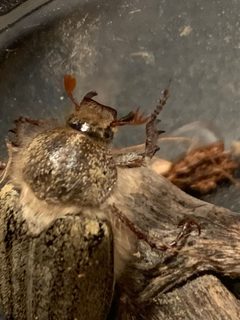
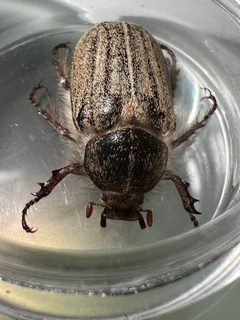
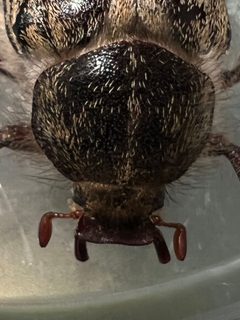
Amblonoxia harfordi is a scarab beetle in the Scarabaeidae, Melolonthinae. It is to California and belongs to a of flightless, soil-dwelling beetles. The is poorly documented in scientific literature, with most records coming from citizen science observations. It is active during spring and early summer.
Pronunciation
How to pronounce Amblonoxia harfordi: /ˌæm.bləˈnoʊk.siə ˈhɑr.fɔr.daɪ/
These audio files are automatically generated. While they are not always 100% accurate, they are a good starting point.
Identification
The Amblonoxia is characterized by flightlessness, with reduced or absent hindwings and that protect the . Members of this genus are generally robust, dull-colored scarabs with a somewhat flattened body form. Specific diagnostic features for A. harfordi separating it from are not well documented in available literature.
Images
Distribution
to California, USA. Records are concentrated in the southern and central portions of the state.
Seasonality
have been observed from March through July, with peak activity in April and May.
Similar Taxa
- Amblonoxia palpalisThe only other in the Amblonoxia; both are flightless California endemics with similar overall . Geographic range and subtle morphological differences separate the two species.
More Details
Taxonomic note
The Amblonoxia was established for flightless melolonthine scarabs previously placed in related genera. The specific epithet honors an individual associated with the original collection, though the etymology is not formally documented in widely accessible sources.
Data limitations
This is represented by relatively few scientific collections and publications. Most occurrence data derives from iNaturalist observations (28 records as of source date), indicating it is infrequently encountered or underreported in formal surveys.