
Hoplia callipyge
LeConte, 1856
Grapevine Hoplia
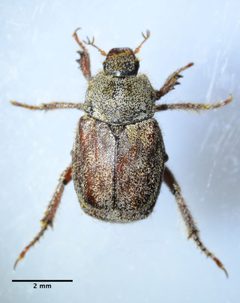
Hoplia callipyge is a small scarab beetle in the Scarabaeidae, commonly known as the Grapevine Hoplia. are active in spring and are recognized as minor agricultural and garden pests due to their feeding on rose petals and other flowers. The occurs in western North America from British Columbia to Baja California. Larvae develop in soil, feeding on roots and decaying organic matter.
Pronunciation
How to pronounce Hoplia callipyge: //ˈhɒpliə ˌkælɪˈpaɪdʒi//
These audio files are automatically generated. While they are not always 100% accurate, they are a good starting point.
Identification
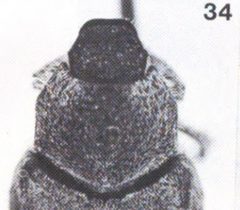
Very similar visually to Hoplia hirta and Hoplia laticollis; reliable identification to level may require examination of genitalia or other subtle morphological characters not visible in routine observation. The combination of small size, oval brown body, and spring activity period in western North America helps narrow to , but species-level determination from photographs alone is problematic.
Images
Appearance
are oval, compact scarab beetles measuring 5.75–10.5 mm in length and 3.4–5 mm in width. Coloration is uniformly brown. The body shape and size are typical of the Hoplia, with a somewhat rounded, convex profile.
Habitat
are found in gardens, agricultural settings, and natural areas where plants occur. Larvae inhabit soil, where they feed on roots and decaying plant material.
Distribution
Western North America: recorded from British Columbia, Canada; the western United States (Arizona, California, Idaho, Nevada, New Mexico, Oregon, Utah, Washington); and Baja California, Mexico.
Seasonality
active March through May.
Diet
feed on petals of light-colored roses and other flowers; also consume young leaves and fruit of certain plants. Larvae feed on roots and decaying plant material in soil.
Host Associations
- Rosa - feeding on petalspreference for light-colored roses noted
- Vitis - suggests association 'Grapevine Hoplia' implies connection, though specific feeding on grapevines not detailed in sources
Life Cycle
are white and deposited in soil. Larvae hatch and develop in soil, feeding on roots and decaying plant matter. occurs in soil. emerge in spring.
Behavior
are noted for aggregating on flowers, particularly rose blossoms, where they feed on petals. Activity is during spring months.
Ecological Role
Larvae contribute to soil nutrient cycling through consumption of decaying plant material. function as herbivores on flowers and young plant tissues.
Human Relevance
Minor pest of ornamental roses and potentially other cultivated plants. Damage is primarily aesthetic, with feeding on flower petals reducing ornamental value. 'Grapevine Hoplia' suggests possible, though not well-documented, association with viticulture.
Similar Taxa
- Hoplia hirtaVery similar visual appearance; -level separation requires careful examination
- Hoplia laticollisVery similar visual appearance; -level separation requires careful examination
More Details
Taxonomic note
The specific epithet 'callipyge' derives from Greek 'kallos' (beauty) and 'pyge' (buttocks), referring to the rounded of the . described by John Lawrence LeConte in 1856.