
Planolinoides borealis
(Gyllenhal, 1827)
Mouse Dung Beetle
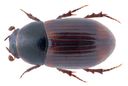
Planolinoides borealis, commonly known as the Mouse , is a small scarab beetle in the Aphodiinae. The has a broad Holarctic distribution, occurring across northern North America and Eurasia. It is associated with rodent burrows and nests, where it feeds on and organic matter. The species was first described by Gyllenhal in 1827.
Pronunciation
How to pronounce Planolinoides borealis: /ˌplænəlɪˈnɔɪdiːz bɔːˈrɪælɪs/
These audio files are automatically generated. While they are not always 100% accurate, they are a good starting point.
Images
Habitat
Associated with rodent burrows and nests, particularly those of mice and other small mammals. Inhabits environments where rodent activity provides and decomposing organic matter resources.
Distribution
Holarctic distribution. Nearctic: Canada (Alberta, British Columbia, Labrador, Manitoba, New Brunswick, Newfoundland, Northwest Territories, Nova Scotia, Ontario, Quebec, Saskatchewan, Yukon Territory), USA (Alaska). Palaearctic: Austria, Belarus, Belgium, Bosnia Herzegovina, Bulgaria, Croatia, Czech Republic, Denmark, Estonia, Finland, France, Georgia, Germany, Great Britain, Hungary, Ireland, Italy, Kazakhstan, Latvia, Lithuania, Macedonia, Montenegro, Mongolia, Netherlands, Norway, Poland, Portugal, Romania, Russia (including Far East and Siberia), Serbia, Slovakia, Spain, Sweden, Switzerland, Ukraine.
Host Associations
- Rodentia - Associated with rodent burrows and nests
- Mus - 'Mouse ' suggests association with mice
More Details
Taxonomic Note
Planolinoides borealis is classified in the Aphodiinae, a group of scarab beetles often referred to as 'small dung beetles' or 'lesser dung beetles'. Members of this subfamily are typically smaller than the more familiar 'true dung beetles' (Scarabaeinae) and often exhibit different ecological associations, including specialization on the of small mammals rather than large herbivores.
Nomenclature
The was originally described by Leonard Gyllenhal in 1827. The name Planolinoides refers to its resemblance to the genus Planolinus, while the specific epithet borealis refers to its northern distribution.