
Dorcus parallelus
(Say, 1824)
Antelope Beetle, Antelope Stag Beetle, Weaver Stag Beetle
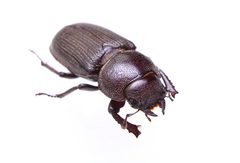
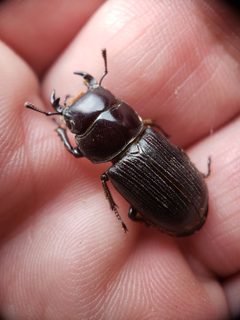
Dorcus parallelus, commonly known as the antelope , is a medium-sized to North America. Males possess distinctive antler-like used during courtship and mating. The measures 15–26 mm in length and exhibits , with male mandibles approximately twice the length of female mandibles. Research on this species remains limited.
Pronunciation
How to pronounce Dorcus parallelus: /ˈdɔrkəs pəˈrælɪləs/
These audio files are automatically generated. While they are not always 100% accurate, they are a good starting point.
Identification
Distinguished from Dorcus brevis by darker coloration, more elongated body, and structure: D. parallelus has one large tooth on the mandible versus two smaller internal teeth in D. brevis. Genitalia differences provide additional diagnostic characters. Often confused with D. brevis in field observations.
Images
Habitat
Associated with decaying wood. Females seek suitable decaying wood for oviposition. Larval development occurs in decaying stumps and logs.
Distribution
to North America. Concentrated in eastern United States and Canada. Documented from Ontario and Quebec in Canada; Alabama, Georgia, Illinois, Indiana, Iowa, Maryland, Massachusetts, Michigan, Nebraska, New Hampshire, New York, Ohio, Oklahoma, South Carolina, Tennessee, Texas, Virginia, and Wisconsin in the United States.
Diet
feed on dead or rotten wood. Larvae feed on decaying stumps and logs, with documented preference for elm wood but capable of utilizing other tree .
Host Associations
- Ulmus - larval food sourcepreferred for larval feeding
Life Cycle
Females deposit in decaying wood following mating. Larvae develop within decaying stumps and logs.
Behavior
Males follow females with open during courtship, palpating and flickering . Males produce a sound when biting female during mounting attempts. After mounting, males thrust mandibles forward to bite the female pronotum and .
Ecological Role
Contributes to wood decomposition through larval feeding on decaying wood.
Human Relevance
Collected by enthusiasts and kept as pets or preserved as specimens due to coloration, size, and distinctive .
Similar Taxa
- Dorcus brevisFrequently confused in field observations; distinguished by tooth structure (one large tooth vs. two small teeth), darker coloration, and more elongated body in D. parallelus.
- Dorcus parallelipipedusSister ; European distribution separates the two geographically.
More Details
Research Status
Extensive research has not been conducted on this ; available information remains limited.
Taxonomic Note
Described by Thomas Say in 1824.