
Hybosorus illigeri
Reiche, 1853
Illiger's Scavenger Scarab
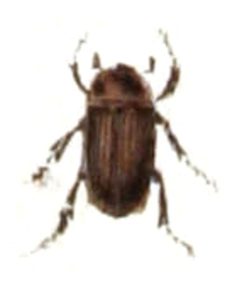
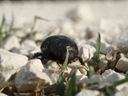
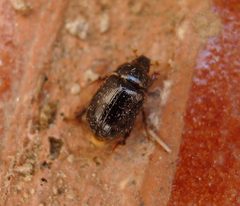
A small scarab beetle in the Hybosoridae with a remarkably broad global distribution spanning the Palaearctic, Afrotropical, Oriental, Madagascan, Nearctic, and Neotropical regions. First described from North Africa in 1853, it has established across multiple continents and is considered introduced in the United States, where its range continues to expand. The is associated with decomposing organic matter.
Pronunciation
How to pronounce Hybosorus illigeri: /hɪˈbɒsərəs ɪˈlɪɡəraɪ/
These audio files are automatically generated. While they are not always 100% accurate, they are a good starting point.
Images
Habitat
Associated with decomposing organic matter; specific microhabitat preferences not well documented in available sources.
Distribution
Native to the Palaearctic region (North Africa, southern Europe, Middle East, Central Asia, parts of India and China). Established introduced in the United States (southeastern and south-central states from Virginia to Texas, plus Arizona and New Mexico), Mexico, Central America, Caribbean islands, and Madagascar. Documented in Russia with expanding range.
Ecological Role
Scavenger; contributes to decomposition of organic matter.
Human Relevance
Introduced in North America with documented range expansion; no significant documented economic or agricultural impact.
Similar Taxa
- Hybosorus rosenbergiCongeneric with overlapping distribution in some regions; H. illigeri distinguished by broader global range and documented presence in North America where H. rosenbergi does not occur.
- Other HybosoridaeSmall size and general scarab-like form may cause confusion with other scavenger scarab ; family Hybosoridae distinguished by specific morphological characters including antennal club structure.
Sources and further reading
- BugGuide
- GBIF taxonomy match
- iNaturalist taxon
- NCBI Taxonomy
- Catalogue of Life
- Hybosorids of the United States and Expanding Distribution of the Introduced Species <I>Hybosorus illigeri</I> (Coleoptera: Scarabaeoidea: Hybosoridae)
- Current distribution of <i>Hybosorus illigeri </i>Reiche, 1853 (Coleoptera: Scarabaeoidea: Hybosoridae) in Russia with description of the structure of endophallus