
Hydrobiomorpha casta
(Say, 1835)
Hydrobiomorpha casta is a water scavenger beetle in the Hydrophilidae. The is distributed across the Caribbean, Central America, and southeastern North America. It is one of approximately 125 species in the Hydrobiomorpha, a group of aquatic beetles adapted to freshwater .
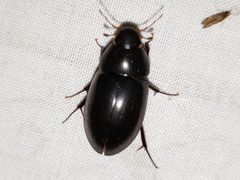
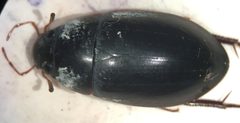

Pronunciation
How to pronounce Hydrobiomorpha casta: /haɪˌdroʊbaɪoʊˈmɔrfə ˈkæstə/
These audio files are automatically generated. While they are not always 100% accurate, they are a good starting point.
Images
Habitat
Aquatic freshwater environments. Based on -level traits and distribution records, the likely inhabits standing or slow-moving water bodies.
Distribution
Caribbean (Cuba, Bahamas), Central America (Guatemala, Belize, Rica, Panama), Mexico, and southeastern United States (Florida, Louisiana, Mississippi, North Carolina, South Carolina, Texas, Virginia).
Ecological Role
As a member of Hydrophilidae, the likely contributes to nutrient cycling in aquatic through scavenging and detritivory.
More Details
Taxonomic Note
The was described by Thomas Say in 1835, making it one of the earlier described members of the Hydrobiomorpha.
Observation Data
iNaturalist records indicate 125 observations of this , suggesting it is encountered with moderate frequency by naturalists in its range.
Sources and further reading
- BugGuide
- Wikipedia
- GBIF taxonomy match
- iNaturalist taxon
- NCBI Taxonomy
- Catalogue of Life
- The Castaway: New monitor lizard fills top-order predator role on remote Pacific island | Blog
- Beetles that go bump in the night: Asiatic Garden Beetles, Maladera Castanea — Bug of the Week
- Chafer madness: Oriental beetle, Anomala orientalis, and Asiatic garden beetle, Maladera castanea — Bug of the Week
- When the American Chestnut Vanished, What Happened to Insects That Fed On It?
- From Red-eyed Flies to Red Flour Beetles, Insects are Model Research Organisms
- Predicting Shifts in the Range of Invasive Insect Species in the Face of Climate Change