
Berosini
Mulsant, 1844
Genus Guides
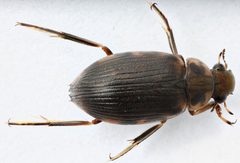
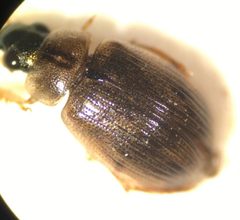
3Berosini is a tribe of water scavenger beetles (Hydrophilidae: Hydrophilinae) comprising 364 in five : Allocotocerus, Berosus, Derallus, Hemiosus, and Regimbartia. The tribe exhibits significant larval ecological diversification, with evolutionary shifts between benthic and cryptic documented. Phylogenetic analysis supports two major clades: one containing Hemiosus and Berosus, and another containing Derallus, Regimbartia, and Allocotocerus.
Pronunciation
How to pronounce Berosini: //bɛˈroʊsɪnaɪ//
These audio files are automatically generated. While they are not always 100% accurate, they are a good starting point.
Identification
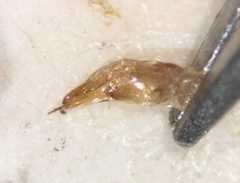
and larvae of Berosini can be distinguished from other Hydrophilinae tribes by morphological characters of the appendages and clypeolabrum. Larval stages show -specific morphological modifications related to specialization: Berosus and Derallus are primarily associated with riverine systems, while Hemiosus species occupy sandy or gravelly substrates. A comparative table of larval characters for all five genera has been published.
Images
Habitat
Aquatic; primarily lentic and lotic freshwater . occupy diverse microhabitats including river systems, standing water bodies, and benthic zones. In South America, species are associated with major river systems (Paraguay-Paraná-Plata, Amazonas, Orinoco, São Francisco, and Desaguadero-Colorado-Negro). Hemiosus species are specifically linked to sandy or rarely gravelly substrates with sediment origins influencing distribution.
Distribution
Global distribution with strong representation in South America. South American fauna includes Berosus, Hemiosus, and Derallus, with most showing associations with major river systems and latitudinal influence in the Paraná-Plata basin. Few species are strictly Neotropical. Subtropical and temperate regions of southern South America also support diverse in lentic .
Behavior
Larvae exhibit diverse locomotory including swimming and crawling, with ecological diversification reflecting shifts. Benthic and cryptic habits have evolved in multiple lineages, accompanied by morphological adaptations. These behavioral shifts represent a major evolutionary theme within the tribe.
Similar Taxa
- HydrophiliniBoth are tribes within Hydrophilinae; Berosini is distinguished by larval morphological characters and specialization patterns, particularly the documented evolutionary shifts to benthic and cryptic larval habits.
More Details
Phylogenetic relationships
Two well-supported clades are recognized within Berosini: (1) Hemiosus + Berosus, and (2) Derallus + Regimbartia + Allocotocerus. This topology was established using 58 morphological characters (32 larval, 26 ).
Larval evolutionary trends
Major evolutionary trends include shifts to benthic and cryptic habits, associated morphological modifications of the clypeolabrum and appendages, and diversification of locomotory strategies.
Sources and further reading
- BugGuide
- Wikipedia
- iNaturalist taxon
- Catalogue of Life
- Distribution of the Species of Berosini (Coleoptera: Hydrophilidae) in South America
- Biodiversity in some lentic habitats from southern South America I. Hydrophilidae Berosini and Hydrophilini (Coleoptera, Hydrophiloidea)
- Phylogeny of Berosini (Coleoptera: Hydrophilidae, Hydrophilinae) based on larval and adult characters, and evolutionary scenarios related to habitat shift in larvae