
Dirhagini
Reitter, 1911
Genus Guides
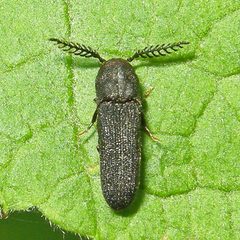
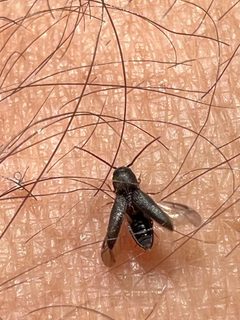
9Dirhagini is a tribe of false click beetles within the Eucnemidae, Melasinae. The tribe is distributed across the Palaearctic and Nearctic regions. Recent taxonomic work has clarified and boundaries, including descriptions of new species from the Russian Far East and redescriptions of poorly known . Members of this tribe are characterized by specific larval morphological traits that distinguish them from other Eucnemidae.

Pronunciation
How to pronounce Dirhagini: //daɪˈræɡɪˌnaɪ//
These audio files are automatically generated. While they are not always 100% accurate, they are a good starting point.
Identification
Dirhagini can be distinguished from other Eucnemidae tribes by features of the capsule, mandibular structure, and antennal insertion. Larvae of at least some (e.g., Entomophthalmus) possess diagnostic characters including specific arrangements of stemmata and distinctive mandibular . The tribe includes genera such as Microrhagus, Dirrhagus, Dirrhagofarsus, Clypeorhagus, and Entomophthalmus, which are separated by characters of the , , and male genitalia.
Images
Distribution
Palaearctic region (including Russian Far East) and Nearctic region. Specific distribution records include the Russian Far East for Microrhagus nikitskyi and M. vicarius, and broader Palaearctic ranges for other such as Microrhagus pyrenaeus and Dirrhagofarsus ferrugineus.
Life Cycle
Larvae of at least some Dirhagini (e.g., Entomophthalmus rufiolus) have been described in detail, indicating a typical holometabolous development with , larval, pupal, and stages. Larval has been characterized for taxonomic purposes, but specific developmental timing and requirements remain poorly documented for most .
Similar Taxa
- Other Eucnemidae tribesDirhagini is distinguished from other tribes in Eucnemidae by larval and morphological characters, including capsule structure and mandibular features. The tribe is placed in Melasinae, separating it from Eucneminae and other subfamilies.
- Elateridae (click beetles)Eucnemidae (false click beetles) including Dirhagini are morphologically similar to true click beetles in Elateridae, but differ in the structure of the prosternal process and its with the mesosternum, as well as larval preferences.
More Details
Taxonomic instability
The tribe has undergone significant nomenclatural revision. Recent work established new combinations (Clypeorhagus elongatus, Dirrhagofarsus ferrugineus) and synonymized Dirrhagofarsus with Pseudorhacopus. The Dirrhagus has been split, with some transferred to Dirrhagofarsus.
Larval biology gap
While larval has been described for some Nearctic (e.g., Entomophthalmus rufiolus), larval stages of most Palaearctic Dirhagini remain undescribed. The ecological role of larvae—whether they are predatory, saprophagous, or —is not clearly established from available literature.
Sources and further reading
- BugGuide
- iNaturalist taxon
- Catalogue of Life
- Two new species of Microrhagus from the Russian Far East with notes on some Palaearctic Dirhagini (Coleoptera: Eucnemidae)
- Eucnemid Larvae of the Nearctic Region. Part IV: Description of the Mature Larva of Entomophthalmus rufiolus (LeConte, 1866) (Coleoptera: Eucnemidae: Melasinae: Dirhagini), with Notes on its Biology