
Anelastes desertorum
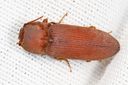
Anelastes desertorum is a of false click beetle in the Eucnemidae. The specific epithet 'desertorum' suggests an association with desert environments. Like other members of Eucnemidae, it belongs to the click beetle superfamily Elateroidea but lacks the clicking mechanism characteristic of true click beetles (Elateridae).
Pronunciation
How to pronounce Anelastes desertorum: //ænəˈlæstiːz dɛzəˈtɔrəm//
These audio files are automatically generated. While they are not always 100% accurate, they are a good starting point.
Identification
Members of Anelastes can be distinguished from true click beetles (Elateridae) by the absence of a prosternal process that fits into a mesosternal cavity, which produces the clicking sound in Elateridae. Eucnemidae typically have a more compact body form and shorter relative to body length compared to many Elateridae. -level identification within Anelastes requires examination of antennal structure, body proportions, and male genitalia.
Images
Habitat
The specific epithet and name suggest association with arid or desert environments, though specific microhabitat preferences are not well documented.
Distribution
Distribution details are not well documented in available sources. The name implies occurrence in desert regions, potentially in western North America given the taxonomic context of related faunal studies.
Ecological Role
As with other Eucnemidae, larvae are likely associated with decaying wood and fungal decomposition, contributing to nutrient cycling in forest and woodland .
Similar Taxa
- ElateridaeTrue click beetles share superficial resemblance and were historically confused with Eucnemidae; distinguished by presence of clicking mechanism and generally more elongated body form.
- ThroscidaeAnother in Elateroidea with similar compact body form; distinguished by details of antennal structure and body proportions.