
Heilipus squamosus
LeConte, 1824
Avocado Weevil, Avocado Tree Girdler
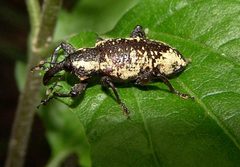
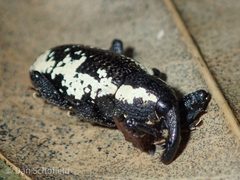
Heilipus squamosus is a large weevil native to the southeastern United States and the sole of its occurring in North America. It gained notoriety as the "avocado tree girdler," causing significant economic damage to Florida avocado groves from the late 1930s through the 1950s, with larval feeding resulting in 8-10% tree mortality. The species was historically considered rare outside avocado-producing regions, but 21st-century citizen science observations have expanded its known range from eight to fifteen states. Long confused with the French Guiana species H. apiatus due to an erroneous distribution in the original 1807 description, this nomenclatural issue was clarified in 2022.
Pronunciation
How to pronounce Heilipus squamosus: /ˈhaɪlɪpəs skwəˈmoʊsəs/
These audio files are automatically generated. While they are not always 100% accurate, they are a good starting point.
Identification
Distinguished from the superficially similar Heilipus apiatus (French Guiana) by geographic range—H. squamosus is the only Heilipus native to the United States. Large, distinctive weevil with a prominent rostrum typical of Curculionidae. Specific diagnostic morphological features distinguishing it from other Molytinae within its range are not documented in available sources.
Images
Habitat
Southeastern United States in areas supporting Lauraceae vegetation, including coastal plains and swampy regions. Associated with tree bases near ground level, pine bark, and shoots. Found in both native forest and cultivated avocado groves.
Distribution
United States: Alabama, Arkansas, Florida, Georgia, Kansas, Kentucky, Louisiana, Mississippi, Missouri, North Carolina, Oklahoma, South Carolina, Tennessee, Texas, and Virginia. Previously recorded from eight southeastern states; seven additional states (Arkansas, Kansas, Kentucky, Louisiana, Missouri, Oklahoma, Texas) represent new records based on 21st-century observations from iNaturalist, BugGuide, and specimen collections.
Diet
Larvae feed under bark near ground level and girdle trees. feed on plant material including leaves and shoots.
Host Associations
- Persea americana - pest_hostConfirmed ; caused 8-10% tree loss in Florida avocado groves 1930s-1950s
- Lindera melissifolia - suspected_native_host found on; federally endangered plant
- Litsea aestivalis - suspected_native_host found on; federally threatened plant
- Persea borbonia - suspected_native_hostSuspected based on distribution and damage similarity
- Sassafras albidum - suspected_native_host collected on
- Cinnamomum camphora - adult_occurrenceReported collection
- Diospyros virginiana - adult_occurrenceThree specimens collected
- Apocynum cannabinum - adult_occurrenceOne specimen photographed
- Gossypium - reportedLiterature report
- Citrus unshiu - reportedLiterature report
Life Cycle
Larvae develop under bark near ground level, feeding in the root collar region and capable of girdling trees. An unidentified larva similar in size to the was found causing feeding damage at the base of a pondberry plant. Adult and developmental timing are not documented.
Behavior
Larvae create feeding galleries under bark that can girdle and kill trees. have been observed causing debarking damage to branches of pondspice and redbay. Historically considered rare with sparse museum collections; recent observations suggest greater abundance than previously recognized.
Ecological Role
Agricultural pest of cultivated avocado with documented economic impact. Potential association with rare and endangered native Lauraceae —pondberry (federally endangered) and pondspice (federally threatened)—though ecological impacts on these are unknown. Native plants in Lauraceae additional pressure from laurel wilt , which may indirectly affect weevil distribution and abundance.
Human Relevance
Significant historical pest of Florida avocado production from the late 1930s through 1950s. No longer considered a major agricultural pest in contemporary avocado . Subject of recent taxonomic clarification resolving long-standing nomenclatural confusion.
Similar Taxa
- Heilipus apiatusPreviously confused due to misapplied name and erroneous distribution in original description; distinct from French Guiana, not occurring in the United States
Misconceptions
Long misidentified as Heilipus apiatus due to an erroneous "Carolina" locality in Olivier's 1807 description. Some 20th-century literature applied this name to the U.S. , while other works correctly used H. squamosus, creating persistent confusion. H. apiatus is a morphologically distinct species from French Guiana, not the southeastern United States.
Sources and further reading
- BugGuide
- GBIF taxonomy match
- iNaturalist taxon
- Catalogue of Life
- Heilipus squamosus (LeConte, 1824): clarification of the correct name for the “avocado tree girdler” with updates on its biology and distribution (Coleoptera, Curculionidae, Molytinae, Hylobiini)
- Supplementary material 1 from: Anzaldo SS, Díaz-Grisales V (2022) Heilipus squamosus (LeConte, 1824): clarification of the correct name for the “avocado tree girdler” with updates on its biology and distribution (Coleoptera, Curculionidae, Molytinae, Hylobiini). Biodiversity Data Journal 10: e85499. https://doi.org/10.3897/BDJ.10.e85499
- Supplementary material 2 from: Anzaldo SS, Díaz-Grisales V (2022) Heilipus squamosus (LeConte, 1824): clarification of the correct name for the “avocado tree girdler” with updates on its biology and distribution (Coleoptera, Curculionidae, Molytinae, Hylobiini). Biodiversity Data Journal 10: e85499. https://doi.org/10.3897/BDJ.10.e85499
- Figure 2 from: Anzaldo SS, Díaz-Grisales V (2022) Heilipus squamosus (LeConte, 1824): clarification of the correct name for the “avocado tree girdler” with updates on its biology and distribution (Coleoptera, Curculionidae, Molytinae, Hylobiini). Biodiversity Data Journal 10: e85499. https://doi.org/10.3897/BDJ.10.e85499
- Figure 1 from: Anzaldo SS, Díaz-Grisales V (2022) Heilipus squamosus (LeConte, 1824): clarification of the correct name for the “avocado tree girdler” with updates on its biology and distribution (Coleoptera, Curculionidae, Molytinae, Hylobiini). Biodiversity Data Journal 10: e85499. https://doi.org/10.3897/BDJ.10.e85499