
Magdalis armicollis
(Say, 1824)
Red Elm Bark Weevil
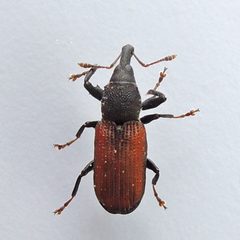
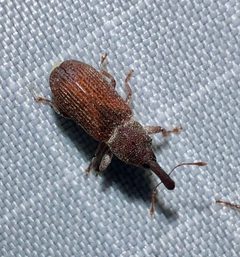
Magdalis armicollis is a bark weevil in the Curculionidae, commonly known as the red elm bark weevil. The is strongly associated with elm trees (Ulmus), with larvae developing within wood and feeding on foliage. It occurs across eastern and central North America. The refers to its association with red elm (Ulmus rubra).
Pronunciation
How to pronounce Magdalis armicollis: //mæɡˈdæ.lɪs ˌɑːr.mɪˈkɒl.ɪs//
These audio files are automatically generated. While they are not always 100% accurate, they are a good starting point.
Images
Habitat
Associated with elm trees (Ulmus spp.), particularly Ulmus rubra (red elm or slippery elm). Larvae inhabit wood of living or recently dead elms.
Distribution
Eastern and central North America. Documented from Canada (New Brunswick, Nova Scotia, Ontario, Québec) and presumably throughout the range of its elms in the United States.
Diet
feed on elm leaves. Larvae develop within elm wood, feeding on inner bark and wood tissues.
Host Associations
- Ulmus rubra - primary - larval development and feeding 'red elm bark weevil' reflects this association
- Ulmus - - larval developmentlikely broader elm association
Life Cycle
Larvae live within wood of Ulmus trees. are free-living and feed on leaves. Specific developmental timing and stage not documented in available sources.
Ecological Role
Wood-boring larva in elm trees; contributes to decomposition of weakened or dying elms.
Similar Taxa
- Other Magdalis species contains multiple bark weevil with similar ; identification to species level requires examination of specific characters not detailed in available sources.
- Other Ulmus-associated CurculionidaeSeveral weevil use elm as ; larval in wood and leaf-feeding is not unique to this species.