
Aphrastus
Say, 1831
Species Guides
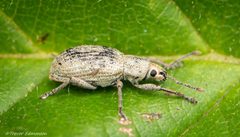
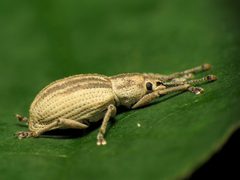
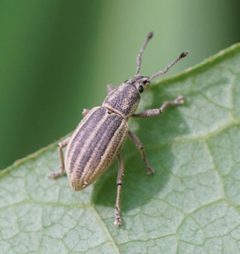
3Aphrastus is a of broad-nosed weevils (Entiminae) established by Thomas Say in 1831. The genus contains five described distributed across North America and Mexico. These weevils are placed in the tribe Phyllobiini within the Curculionidae. The genus is represented by 589 iNaturalist observations, indicating moderate documentation of its occurrence in the field.
Pronunciation
How to pronounce Aphrastus: /æfˈræstəs/
These audio files are automatically generated. While they are not always 100% accurate, they are a good starting point.
Identification
Aphrastus are distinguished from other Phyllobiini by their broad, short rostrum characteristic of Entiminae weevils. The can be separated from related broad-nosed weevils by specific elytral patterns and body proportions described in original species descriptions, though detailed diagnostic features for the genus as a whole require examination. Species-level identification relies on examination of elytral markings, body coloration, and male genitalia.
Images
Distribution
North America and Mexico. Specific distributions vary: Aphrastus taeniatus has been documented across eastern and central North America, while other species have more restricted ranges.
Similar Taxa
- PhyllobiusBoth belong to tribe Phyllobiini and share the broad-nosed weevil ; Phyllobius is primarily Palearctic while Aphrastus is Nearctic, and Phyllobius often show more pronounced metallic scaling
- PolydrususAnother Phyllobiini with similar body form; Polydrusus typically exhibit brighter metallic green or blue coloration and have different tarsal claw structure
- Entiminae genera (general)All share the diagnostic broad, short rostrum that distinguishes the from other Curculionidae; Aphrastus is distinguished by its specific combination of antennal insertion, scrobe structure, and body proportions
More Details
Species diversity
The contains five described : A. angularis Champion 1911, A. griseus (Blatchley 1916), A. submarginatus (Champion 1911), A. taeniatus Say 1831 (type species), and A. unicolor Horn 1876. No recent taxonomic revisions have been published.
Nomenclatural history
The was established by Thomas Say in 1831 with Aphrastus taeniatus as the type . Several species were later transferred into the genus by George Champion and others in the early 20th century.