
Phacepholis elegans
Horn, 1876
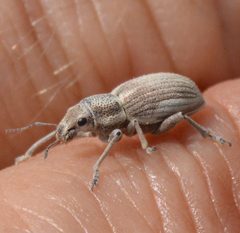
Phacepholis elegans is a of broad-nosed weevil in the Curculionidae, described by Horn in 1876. It belongs to the tribe Naupactini, a group known for root-feeding larvae and weevils that typically feed on foliage. The species has been recorded from several western and midwestern U.S. states including Arizona, California, Colorado, Iowa, and Kansas. As with many Naupactini, the larvae likely feed on roots while adults feed on above-ground plant tissues.
Pronunciation
How to pronounce Phacepholis elegans: //fæsɛˈfoʊlɪs ˈɛlɪɡænz//
These audio files are automatically generated. While they are not always 100% accurate, they are a good starting point.
Images
Distribution
Recorded from Arizona, California, Colorado, Iowa, and Kansas based on GBIF distribution records. The range spans western and midwestern United States.
More Details
Taxonomic Placement
Phacepholis elegans is classified in the tribe Naupactini, Entiminae. Naupactini is a large tribe of broad-nosed weevils, many of which are economically important pests. The Phacepholis contains multiple , all western in distribution.
Data Availability
Few detailed biological studies have been published specifically for P. elegans. Most information about the and tribe is extrapolated from better-studied relatives. iNaturalist records show 9 observations as of the data retrieval date.
Sources and further reading
- BugGuide
- GBIF taxonomy match
- iNaturalist taxon
- Catalogue of Life
- Bring on the Tourists! | Bug Squad
- More Nematodes in Outer Space? | Bug Squad
- Showcasing Animal and Plant Parasitic Nematodes | Bug Squad
- Don't Miss the Nematode Collection at UC Davis Biodiversity Museum Day Feb. 10 | Bug Squad
- UC Davis Speaker: Fatma Kaplan, A Go-Getter and Maybe a Genius | Bug Squad
- Bug Eric: Wasp Wednesday: Steniolia elegans