
Ericydeus lautus
(LeConte, 1856)
Ericydeus lautus is a of broad-nosed weevil in the Curculionidae. It was first described by LeConte in 1856. The species belongs to a predominantly New World distributed from North America through Central America to South America. Phylogenetic analysis places E. lautus in a clade with other North and Central American species, distinct from South American .
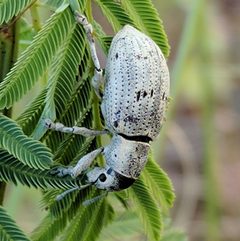

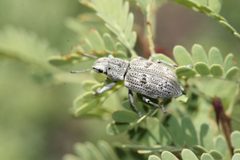
Pronunciation
How to pronounce Ericydeus lautus: /ˌɛrɪˈsaɪdiəs ˈlɔːtəs/
These audio files are automatically generated. While they are not always 100% accurate, they are a good starting point.
Identification
Ericydeus lautus can be distinguished from South American by phylogenetic affinity to the North/Central American clade, which includes E. yucatanus, E. forreri, E. cupreolus, and the E. modestus . Within this clade, E. lautus is most closely related to E. placidus. Specific diagnostic morphological characters for this are not provided in accessible sources.
Images
Distribution
North America. The is part of a clade distributed in Central and North America, separate from South American Ericydeus species.
Similar Taxa
- Ericydeus placidusSister to E. lautus in phylogenetic analysis; both form a terminal clade within the North/Central American group
- Ericydeus forreriMember of the same North/Central American clade, though not as closely related
- Ericydeus modestus species complex (E. modestus, E. viridans, E. duodecimpunctatus)Grouped in the same North/Central American clade in phylogenetic reconstruction
More Details
Phylogenetic placement
Cladistic analysis of the Ericydeus places E. lautus in a clade with North and Central American , separate from the South American clade. Character evolution in the genus follows a southern-to-northern direction.